

Close Menu
Today's Dietitian MagazineToday's Dietitian Magazine
  • Magazine
    • Current Issue
    • Issue Archive
    • Subscribe
  • Articles
    • Heart Health
    • Diabetes
    • Clinical Nutrition
    • Gut Health
    • Weight Management
    • Healthy Aging
    • Sustainability
    • Professional Growth
    • Fitness and Sports Nutrition
    • Ask the Expert
    • Cultural Foods
    • Food Allergies
    • Foodservice
  • Continuing Education
  • Symposium
  • Enewsletter
  • More
    • Events
    • Careers
    • Guides & Showcases
    • Toolkits
    • Gift Shop
    • Resources
    • Reprints
    • Writers’ Guidelines

Newsletter Signup

Facebook X (Twitter) Instagram LinkedIn
Trending
  • Study May Explain Why IBD Patients React to Foods They Once Tolerated
  • New Position Statement Linking Human Health and Planetary Health
  • Navigating Personalized Nutrition Tech in Dietetic Practice
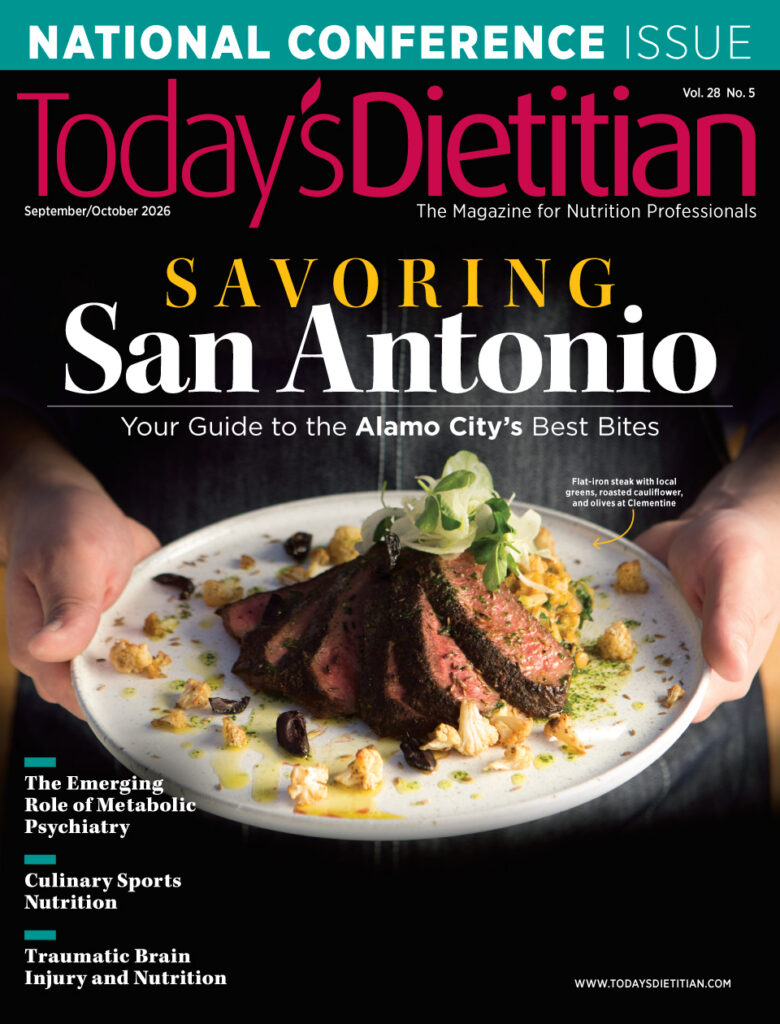
  • Savoring San Antonio
  • The Emerging Role of Metabolic Psychiatry
  • Culinary Sports Nutrition
  • Traumatic Brain Injury and Nutrition Support
  • CPE Monthly: Targeted Nutrition Interventions for Short Bowel
  • About
  • Advertise
  • Contact
Facebook X (Twitter) Instagram LinkedIn Threads
Today's Dietitian MagazineToday's Dietitian Magazine
CURRENT ISSUE
September/October 2026
Subscribe
  • Magazine
    • Current Issue
    • Issue Archive
    • Subscribe
  • Articles
    • Heart Health
    • Diabetes
    • Clinical Nutrition
    • Gut Health
    • Weight Management
    • Healthy Aging
    • Sustainability
    • Professional Growth
    • Fitness and Sports Nutrition
    • Ask the Expert
    • Cultural Foods
    • Food Allergies
    • Foodservice
  • Continuing Education
  • Symposium
  • Enewsletter
  • More
    • Events
    • Careers
    • Guides & Showcases
    • Toolkits
    • Gift Shop
    • Resources
    • Reprints
    • Writers’ Guidelines
Today's Dietitian MagazineToday's Dietitian Magazine
Home » Editor’s Spot: Cancer and Heart Disease

Editor’s Spot: Cancer and Heart Disease

Judith Riddle, EditorJudith Riddle, Editor2 Mins ReadFebruary 1, 2020
Share Facebook Twitter LinkedIn Threads Email Copy Link
Share
Facebook Twitter LinkedIn Threads Email Copy Link

Today’s Dietitian
Vol. 22, No. 2, P. 6

A few weeks ago, I read a riveting article about a woman named Toni who was diagnosed with breast cancer at age 29. She underwent a lumpectomy followed by radiation and the chemotherapy drugs cyclophosphamide and doxorubicin. At age 35, she discovered another malignant tumor in her other breast. She then had a double mastectomy and underwent more chemotherapy with the same drugs. Shortly after, she was diagnosed with heart failure due to the cardio-toxic effects of the drugs and would later need a heart transplant.

The good news is that she has returned to a normal and active life. She went from running 5Ks to marathons and is encouraging other female cancer survivors to eat healthfully, exercise regularly, and take care of their hearts.

Toni’s story isn’t unique. Many women diagnosed with breast cancer eventually develop heart problems months and even decades later as a result of radiation and chemotherapy treatments. Both modalities can scar or stiffen heart tissue and lead to hypertension, arrhythmias, myocardial ischemia, valvular disease, thromboembolic disease, and pericarditis. Breast cancer therapies and their association with CVD led the American Heart Association to publish a scientific statement in 2018—which reviewed the prevalence of CVD and breast cancer, their common risk factors, and the negative impacts of breast cancer treatments on cardiovascular health—and advocate for continued research in this area. In fact, the link between cancer and heart health is what spawned the emerging field of cardio-oncology, a medical specialty once considered two separate entities (cardiology and oncology), but in reality are inextricably linked.

In honor of American Heart Month, cardio-oncology is the subject of our cover story, “Cancer & Cardiovascular Care,” by Karen Collins, MS, RDN, CDN, FAND. In this article, Collins provides an overview of this burgeoning medical field and discusses cancer treatment, CVD risk, and the key role dietitians can play to improve patient outcomes through diet and nutrition.

After reading this article, make sure you turn to the features on the nutrient content of beets, lactose-free dairy trends, choline and CVD, and picky eating in children. Please enjoy the issue!

Judith Riddle
Editor
TDeditor@gvpub.com

Share. Facebook Twitter LinkedIn Threads Email Copy Link

Related Articles

September/October 2026

Editor’s Spot: Moving Into a New Role

October 1, 2026
September/October 2026

Ask the Expert: Navigating Shifting Nutrition Information

October 1, 2026
September/October 2026

Clinical Nutrition: Nutrition Therapy for Appendicitis

October 1, 2026
Featured Toolkits
View All
Beef Aficionados
Sponsored By
National Cattlemen’s Beef Association (NCBA)
FEMA Flavor Toolkit
Sponsored By
FEMA
U.S. Soy and SNI Global Health Professional Hub
Sponsored By
U.S. Soy and SNI Global
Featured Guides & Showcases
View All
2026 January/February Product Spotlight
2025 November/December Product Spotlight
2025 October Product Spotlight
2025 June/July Product Spotlight
2025 Wellness & Prevention Resource Guide

Newsletter Signup

Social Media
  • Facebook
  • X
  • Instagram
  • LinkedIn

The leading independent source for news, information, research, and industry trends among the nation’s influential community of nutrition professionals.

1721 Valley Forge Road #486, Valley Forge, PA 19481
Phone: 1-800-278-4400

Facebook X (Twitter) Instagram LinkedIn Threads

Newsletter Signup

  • Home
  • Subscribe
  • About
  • Contact
  • Advertise
  • Privacy Policy
  • Terms & Conditions
© 2026 Great Valley Publishing Company. All rights reserved.

Type above and press Enter to search. Press Esc to cancel.