

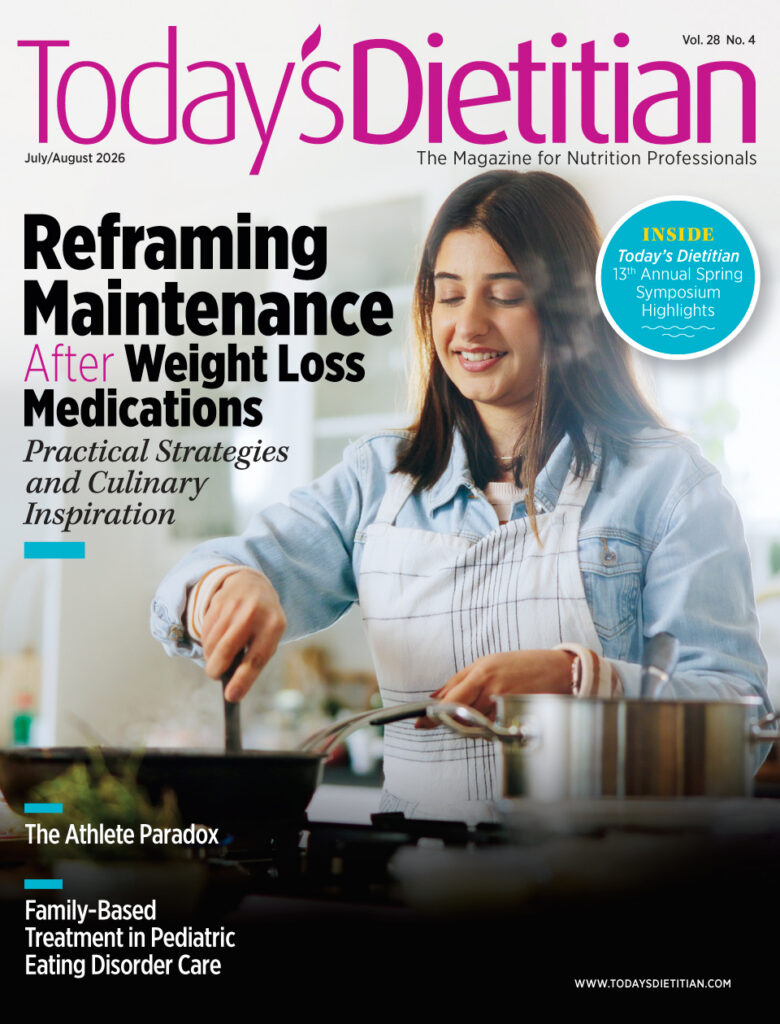
Most next-generation antiobesity medications like GLP-1 receptor agonists are recommended for long-term use, yet discontinuation is common. Discover practical tips alongside easy, delicious recipes to support patients who may encounter transition challenges.
Clinical Nutrition
Learn more about best practices for what many experts consider the gold-standard outpatient intervention for children and adolescents diagnosed with anorexia nervosa and bulimia nervosa.
Despite being metabolically healthy, some highly trained athletes show glucose or insulin impairments. Learn what this “athlete paradox” means for cardiometabolic health, recovery, adaptation and long-term performance sustainability.
Certain dietary patterns may reduce symptom severity by reducing inflammation and modulating hormone levels. RDs with expertise share clinical wisdom for patients diagnosed with this challenging condition.
Although emulsifiers play an important part in food manufacturing, researchers are asking whether they may also negatively impact eosinophilic esophagitis, dysphagia, and irritable bowel syndrome.
Patients with chronic critical illness face profound nutrition challenges after the ICU. Targeted nutrition therapy plays a critical role in recovery, functional improvement, and long-term outcomes.
The concepts of metabolically healthy obesity and metabolically unhealthy normal weight challenge BMI-centered thinking, highlighting why metabolic health, behaviors, and bias-free care matter more than body size alone.
Traditional meal plans often fail neurodivergent clients. Flexible, sensory-aware frameworks can help autistic and ADHD individuals build sustainable, satisfying eating routines that honor autonomy and real-life needs.
Time-restricted eating has gained attention in oncology nutrition, with emerging research suggesting potential benefits for cancer risk reduction and metabolic health—though evidence in active cancer care remains limited.
Dietitians are well-versed in the foundational principles of the Dietary Guidelines for Americans, which emphasize a “food-first” approach to nutrition: “Nutritional needs should be met primarily from foods and beverages—specifically, nutrient-dense foods and beverages.