


Today’s Dietitian
Vol. 28 No. 5 P. 28
What started as scrappy smoothie-making sessions housed in a poorly lit conference room with janky trail mix bars anywhere they could fit has evolved into fully developed cooking classes in a state-of-the-art teaching kitchen. Despite the logistical differences, many settings and scenarios can offer space where athletes can come together, relieve stress, learn about nutrition, and of course, fuel performance.
As the lone sports dietitian at a small Division-1 program with nearly 500 student-athletes to care for, finding opportunities to prepare food can be challenging. No matter what the resources, I never let this deter me, as the culinary side of sports nutrition is something I have always valued. For decades I’ve seen student-athletes come to college feeling overwhelmed and not particularly ready for what lies ahead. Giving them even the smallest hands-on experience with food always seems to make things better.
Regardless of the recipe, cooking is something that not only helps during their years as a student-athlete but also is a life skill they can take with them forever. With 20 years of expertise as a culinary and sports dietitian, this is where my two worlds collide. From establishing best practices for setting up a team cooking class and troubleshooting common pitfalls to developing all-star menus and allergen-friendly recipes, I’m here to share what has worked for me over the years in hopes it may support other RDs’ work.
Athletes in the Kitchen
Cooking is one of the most underrated performance tools an athlete can have. In a world filled with grab-and-go meals, supplements, and convenience foods, taking the time to cook may seem like a luxury—but for athletes, it’s a competitive advantage. Cooking, even in its simplest form, puts you in control of the ingredients that fuel training, recovery, and long-term health. Instead of guessing what’s in a takeout meal or trusting that a packaged option is “high protein,” cooking allows athletes to tailor meals and snacks to their individual performance needs. It turns nutrition from something reactive into something intentional.
No kitchen? No problem. “Cooking” can happen in dorm rooms, friends’ apartments, and even in the locker room with tools like microwaves, air fryers, and just a small amount of counter space. Just as importantly, cooking is a skill that builds consistency—arguably the most powerful factor in achieving athletic goals. When athletes can reliably prepare foods that support their workload, they’re less likely to miss fueling windows, undereat, or rely on foods that don’t align with training demands. Basic cooking habits like scrambling eggs, making sandwiches, or batch-cooking postworkout meals can smooth the edges of a demanding training schedule.
Beyond the physical benefits, cooking gives athletes a sense of ownership and connection to the fueling process. It transforms eating from a chore into a strategy, and from a strategy into a ritual. The kitchen becomes an extension of the training environment—another place to practice discipline, creativity, and care.
Supporting Data
A scoping review published in 2025 reinforces that applied sports nutrition, including culinary skills, is crucial yet grossly understudied.1 The data that does exist points to positive outcomes and increased nutrition knowledge—key factors in determining best practices for performance nutrition education. The review’s authors wrote, “By utilizing a multidisciplinary approach and strong study design, culinary interventions have the potential to positively influence nutrition knowledge, food preparation and cooking skills, dietary intake, and performance across all ages and competition levels and provide athletes with autonomy around nutrition.”
Hands-on cooking experiences benefit student-athletes in the moment as well as lead them to make overall healthier choices, in part by altering prior perceptions that cooking is too time consuming or does not fit into already hectic schedules.2,3
Planning a Culinary Sports Nutrition Class
No matter what your manpower, budget, or facilities, you can create a cooking environment for athletes. As you plan, keep these procedural aspects in mind.
Explore Your Options
In team meetings leading up to the class, put out feelers for what the group wants to make. Budgets may dictate the final menu (salmon for the entire lacrosse team might be too cost prohibitive) but working within the individual team dynamic will make for a better class. If you can’t make exactly what they want, create ways to provide similar flavors. If salmon is out, perhaps canned salmon on a salad or smoked salmon whipped into a cream cheese as part of a brunch menu is more doable.
Consider Dietary Restrictions
Work with coaches and sports medicine staff to verify any allergies and dietary restrictions on the roster. Simple swaps and modifications can be made in most recipes to ensure everyone on the team feels included in the class.
Pick the Best Time
Cooking classes may need to be scheduled during a practice block, as part of preseason activities, over holiday breaks, or on nights and weekends. Figure out what makes the most sense so that the entire team can attend. Work with coaching staff to plan classes around training to avoid sending them directly into a workout following a large meal. If pretraining is the only option for a class, focus on preworkout snack ideas that the athletes can apply to their day-to-day schedules going forward.
Factor in Team Size
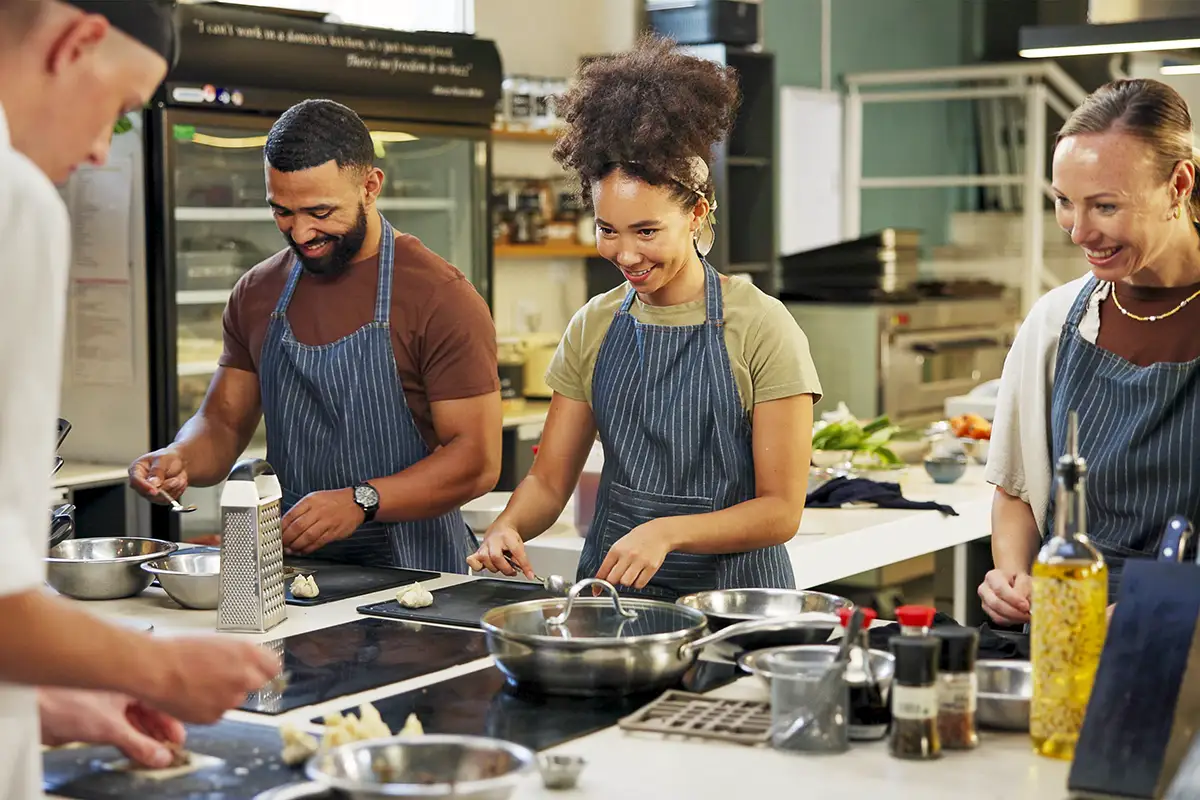
Consider the number of athletes as you plan your cooking class offerings. Small rosters may mean making fewer recipes and large rosters may mean you need to split up groups. For teams with more than 20 athletes, consider partnering with another member of the support staff and create dual sessions where half the team cooks for an hour, while the other half does another activity. The groups then switch, and the other group contributes to the meal. Finally, both groups come together and enjoy the meal together.
Solidify the Menu and Scale the Recipes
Choose recipes that are simple and cohesive while considering seasonality, cooking time, and reproducibility. The goal is to inspire the attendees to make these recipes again on their own at home.
I always provide recipes after the class for the team to take home, but they may need to be scaled during the cooking class to accommodate the larger team size.
Order Groceries
You can save time by placing an online order and scheduling a curb-side pick-up. This also allows assistant coaches or other team staff to help when needed. Make sure to check for any last-minute items that are out of stock and didn’t make it into the final order at pickup, as this may call for adjustments and another quick ingredient run.
Create Opportunities for Team Building
This comes naturally with the territory but adding elements like taste tests (even bringing in guest judges to participate in the taste test) and surprise ingredients can add other dimensions of fun. And don’t forget to take pictures for the team to post on their social media!
— Dana Angelo White, MS, RD, ATC, is a dual registered dietitian nutritionist and certified athletic trainer with over 20 years of clinical experience. She is a media dietitian, cookbook author, and full-time professor and sports RDN at Quinnipiac University in Hamden, Connecticut.
References
1. Camp R, Witard OC, Renard M, Catháin CÓ, Lavelle F. Do athletes cook? A systematic scoping review of culinary nutrition in athletes. Nutr Bull. 2026;51(3):322-336.
2. Renard M, Kelly DT, Ní Chéilleachair N, Lavelle F, Ó Catháin C. Cooking and food skills confidence of team sport athletes in Ireland. Nutr Bull. 2023;48(3):329-342.
3. Ellis J, Brown K, Ramsay S, Falk J. Changes in student-athletes’ self-efficacy for making healthful food choices and food preparation following a cooking education intervention. J Nutr Educ Behav. 2018;50(10):1056-1058.