

Close Menu
Today's Dietitian MagazineToday's Dietitian Magazine
  • Magazine
    • Current Issue
    • Issue Archive
    • Subscribe
  • Articles
    • Heart Health
    • Diabetes
    • Clinical Nutrition
    • Gut Health
    • Weight Management
    • Healthy Aging
    • Sustainability
    • Professional Growth
    • Fitness and Sports Nutrition
    • Ask the Expert
    • Cultural Foods
    • Food Allergies
    • Foodservice
  • Continuing Education
  • Symposium
  • Enewsletter
  • More
    • Events
    • Careers
    • Guides & Showcases
    • Toolkits
    • Gift Shop
    • Resources
    • Reprints
    • Writers’ Guidelines

Newsletter Signup

Facebook X (Twitter) Instagram LinkedIn
Trending
  • Study May Explain Why IBD Patients React to Foods They Once Tolerated
  • New Position Statement Linking Human Health and Planetary Health
  • Navigating Personalized Nutrition Tech in Dietetic Practice
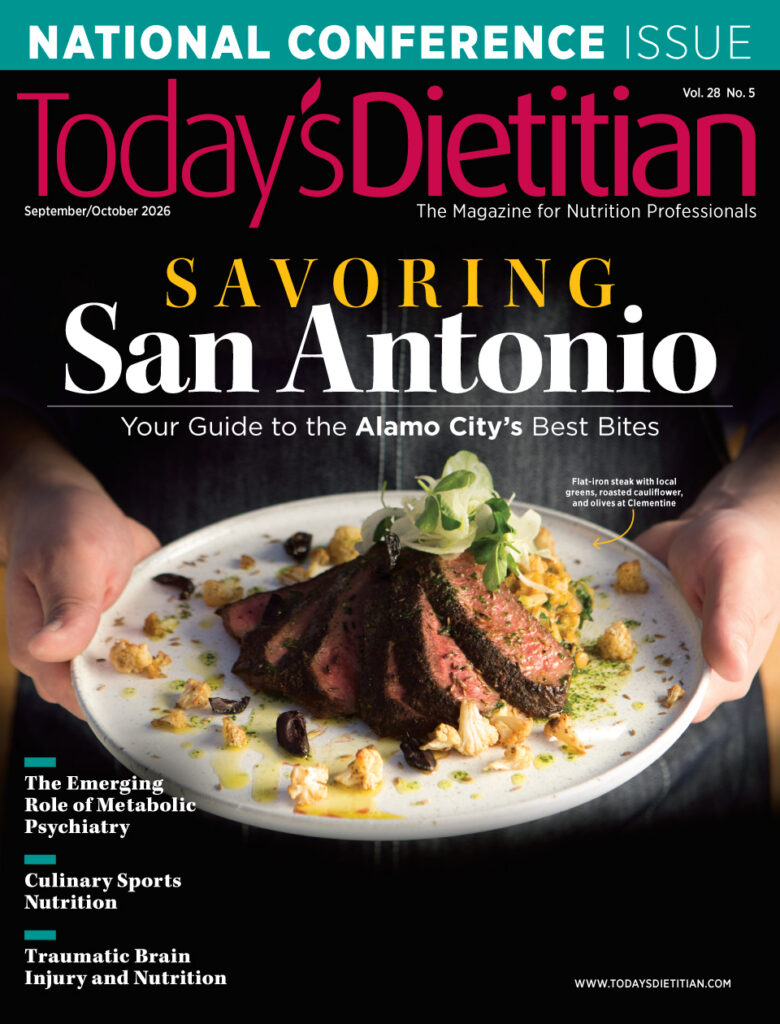
  • Savoring San Antonio
  • The Emerging Role of Metabolic Psychiatry
  • Culinary Sports Nutrition
  • Traumatic Brain Injury and Nutrition Support
  • CPE Monthly: Targeted Nutrition Interventions for Short Bowel
  • About
  • Advertise
  • Contact
Facebook X (Twitter) Instagram LinkedIn Threads
Today's Dietitian MagazineToday's Dietitian Magazine
CURRENT ISSUE
September/October 2026
Subscribe
  • Magazine
    • Current Issue
    • Issue Archive
    • Subscribe
  • Articles
    • Heart Health
    • Diabetes
    • Clinical Nutrition
    • Gut Health
    • Weight Management
    • Healthy Aging
    • Sustainability
    • Professional Growth
    • Fitness and Sports Nutrition
    • Ask the Expert
    • Cultural Foods
    • Food Allergies
    • Foodservice
  • Continuing Education
  • Symposium
  • Enewsletter
  • More
    • Events
    • Careers
    • Guides & Showcases
    • Toolkits
    • Gift Shop
    • Resources
    • Reprints
    • Writers’ Guidelines
Today's Dietitian MagazineToday's Dietitian Magazine
Home » Study May Explain Why IBD Patients React to Foods They Once Tolerated

Study May Explain Why IBD Patients React to Foods They Once Tolerated

Today's DietitianToday's Dietitian3 Mins ReadOctober 20, 2026
Share Facebook Twitter LinkedIn Threads Email Copy Link
Share
Facebook Twitter LinkedIn Threads Email Copy Link

A new study published in Gastroenterology finds that gut inflammation can change the way gut bacteria break down food—possibly triggering immune reactions to foods that were previously fine to eat. The findings may help explain why so many people with inflammatory bowel disease (IBD) react badly to foods like dairy or gluten, even in remission.

IBD, which includes Crohn’s disease and ulcerative colitis, is marked by flare-ups of severe inflammation, and many patients change their diets to manage symptoms, despite limited evidence that this helps. About two-thirds of IBD patients report food-related symptoms. Dairy, wheat, and fiber are the most frequently blamed triggers, but why they cause problems has remained unclear.

The gut microbiota, the trillions of bacteria living in the intestines, may hold the answer. These bacteria help digest foods that human enzymes can’t process alone, and prior research has shown IBD patients often have altered gut bacteria. This study identifies a novel mechanism by which that alteration drives food reactions.

“The microbiome acts as a metabolic organ, helping us digest food components, including those that can trigger gut reactions,” says study author Alberto Caminero, PhD, of the McMaster University Medical Centre. “Our study shows that inflammation impairs this microbial digestive capacity, potentially contributing to adverse food reactions and opening new possibilities for microbiome-based therapies to restore this function in IBD patients.”

Using two mouse models of colitis, researchers found that inflammation made animals more prone to developing food sensitivities. After inflammation, exposure to dairy or gluten triggered an allergic-type immune response in the colon; reintroducing those foods later caused heightened gut sensitivity and worse colitis symptoms.

The cause traced back to the microbiota: inflammation depleted the specific bacteria that normally break down these food triggers. That shift alone was enough to increase sensitization risk—transferring gut bacteria from inflamed mice into germ-free mice made those mice more prone to sensitization to the same foods, while restoring the missing bacteria reduced these effects.

The pattern held in people, too. Among IBD patients, those who self-reported food intolerances were more likely to have both a reduced ability to break down common trigger foods and lower levels of the bacteria responsible for that job.

The researchers note that microbiota disruption is likely just one piece of a larger picture that also includes genetics, infections, and stress—all of which need further research.

Together, the findings point to a possible mechanism behind food sensitivities in IBD: Inflammation disrupts the gut bacteria that normally process certain foods, and this disruption—not the foods themselves—helps trigger the immune reactions patients experience.

— Source: American Gastroenterological Association

Share. Facebook Twitter LinkedIn Threads Email Copy Link

Related Articles

Nutrition News

New Position Statement Linking Human Health and Planetary Health

October 20, 2026
Nutrition News

Dementia Prevention Can’t Rely on Individual Choices Alone, New Study Finds

September 23, 2026
Nutrition News

Bariatric Surgery Significantly More Effective Than GLP-1 Drugs for Weight Loss and Disease Remission

September 23, 2026
Featured Toolkits
View All
FEMA Flavor Toolkit
Sponsored By
FEMA
U.S. Soy and SNI Global Health Professional Hub
Sponsored By
U.S. Soy and SNI Global
Featured Guides & Showcases
View All
2026 January/February Product Spotlight
2025 November/December Product Spotlight
2025 October Product Spotlight
2025 June/July Product Spotlight
2025 Wellness & Prevention Resource Guide

Newsletter Signup

Social Media
  • Facebook
  • X
  • Instagram
  • LinkedIn

The leading independent source for news, information, research, and industry trends among the nation’s influential community of nutrition professionals.

1721 Valley Forge Road #486, Valley Forge, PA 19481
Phone: 1-800-278-4400

Facebook X (Twitter) Instagram LinkedIn Threads

Newsletter Signup

  • Home
  • Subscribe
  • About
  • Contact
  • Advertise
  • Privacy Policy
  • Terms & Conditions
© 2026 Great Valley Publishing Company. All rights reserved.

Type above and press Enter to search. Press Esc to cancel.