



Today’s Dietitian
Vol. 28 No. 5 P. 38
Take this course and earn 2 CEUs on our Continuing Education Learning Library
Short bowel syndrome (SBS) is commonly defined as extensive loss of the small bowel, leading to nutrient malabsorption. An adult fits the criteria for SBS if there is less than 180 to 200 cm (5.9 to 6.6 feet) of the normal 275 to 850 cm (9 to 27.9 feet) of small bowel remaining after surgical resection.1 While this is the most widely accepted technical criteria, some medical sources also classify severe loss of function of the small bowel even without removal as SBS.2
Surgical removal of the small bowel that leads to SBS in adults has a wide range of causes. It most commonly results from inflammatory bowel diseases like Crohn’s disease and ulcerative colitis or reduced blood flow to the intestines known as mesenteric ischemia.1,3 Other causes include postsurgery complications, inflammation of the small intestine due to radiation therapy, trauma, tumors, and intestinal obstructions.1,2
SBS may also present in children, typically due to congenital defects. Rarely, some children may be born with a shortened bowel, narrowing of the bowel, part of the bowel twisted around itself, or birth defects that cause part of the intestine to stick out from the navel or umbilical cord. Some premature infants develop SBS from surgical resection of the bowel due to necrotizing enterocolitis, a condition that causes death of intestinal tissue.1,2
The severity of SBS is highly dependent on the length, position, and function of the remaining small bowel. A normal small bowel consists of the duodenum, jejunum, and ileum, each of which plays a unique role in digestion and nutrient absorption. These sections are covered in small, fingerlike projections called villi that absorb digested nutrients so they enter the bloodstream and go where they are needed.4
The duodenum is connected to the stomach, continues the process of macronutrient digestion, and is the primary site for the absorption of iron, calcium, and some magnesium.2 The jejunum, or middle portion of the small intestine, is where macronutrients, iron, folate, calcium, and most micronutrients are absorbed. Lastly, the ileum is necessary for the absorption of bile salts, vitamin B12, and magnesium. The ileum is connected to the colon, where water and electrolytes are absorbed. Although the colon is not part of the small bowel, whether or not it is also removed has an impact on the prognosis and management of SBS.1,2,5
Anatomical Variations, Symptoms, and Treatment Goals
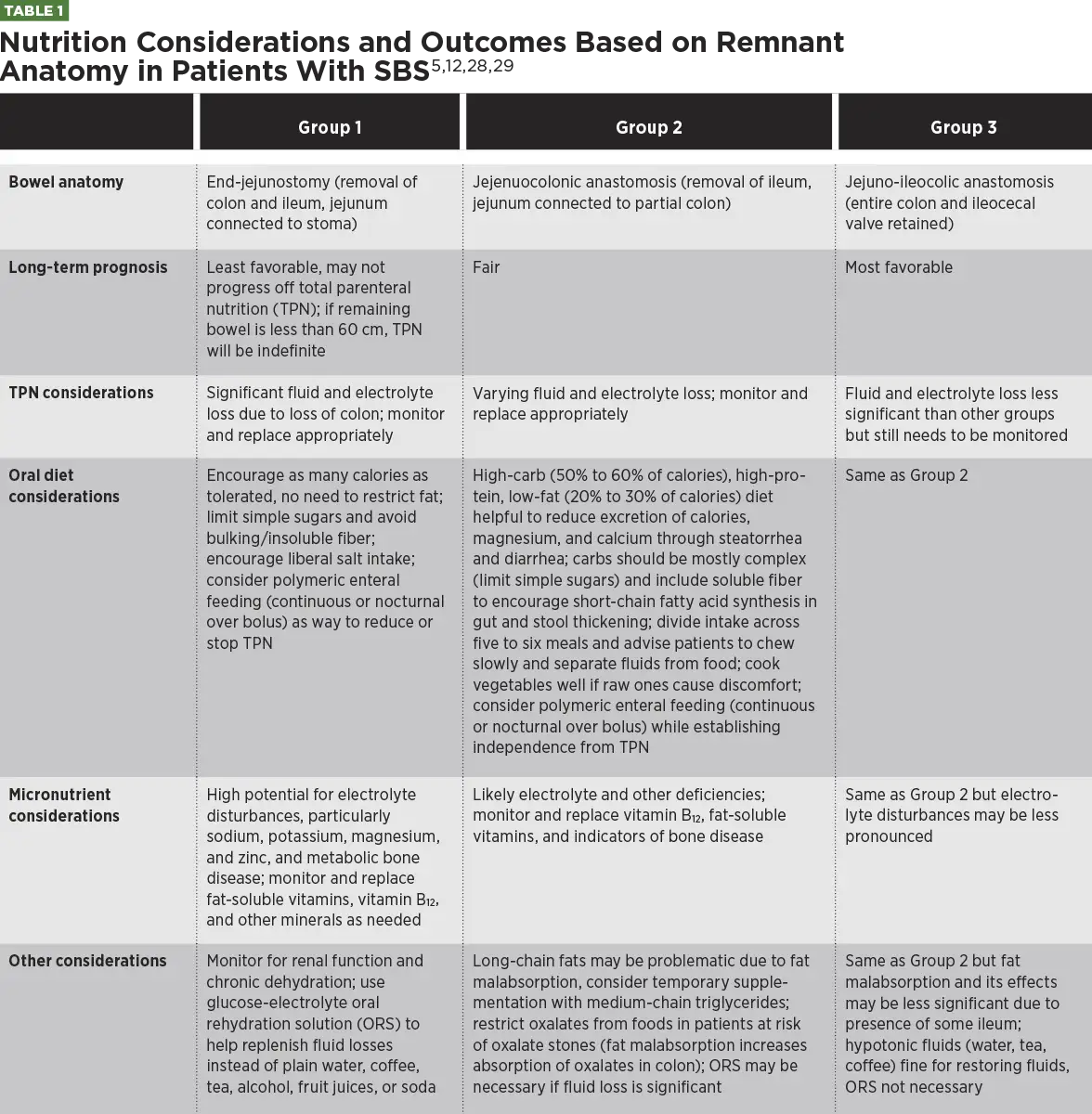
The anatomical variations associated with SBS are divided into three groups. Group 1 covers end-jejunostomy procedures: the removal of the ileum and colon and connection of the remaining jejunum to a stoma. Group 2 includes jejunocolic anastomosis: the removal of the ileum and connection of the jejunum directly to the colon. Group 3 cover jejunoileocolic anastomosis: the removal of part of the bowel but with the jejunum, ileum, and colon still connected.1,5
Since the anatomical presentation of SBS can vary greatly, signs and symptoms result from malabsorption but are not always consistent. Many patients experience diarrhea that is often severe and high-volume. This may be associated with dehydration, weight loss, and loss of electrolytes, in addition to fatigue, cramping, and greasy stools. Malnutrition, including signs of vitamin and mineral deficiencies and muscle wasting, is also common. In children, SBS may also result in poor growth.1,2
A patient’s remnant anatomy is often the most important factor in the prognosis and management of SBS. It dictates symptoms, nutritional needs, and possible complications. RDs, along with other members of the care team, must consider a patient’s intestinal anatomy and anticipate the resulting dysfunctions related to nutrient absorption and digestion when crafting care plans.1,5
Treatment and monitoring of SBS needs to be highly individualized. Initial goals include managing symptoms and providing immediate nutrition support, while long-term plans support intestinal adaptation and helping patients get to some level of independence from total parenteral nutrition (TPN) or enteral feeding.1,5 Patients with SBS undergo treatment and monitoring for long periods of time, and the interdisciplinary care team must monitor and address quality of life and psychosocial challenges.3
SBS is considered a rare disease, but its incidence and prevalence are unknown. As a result, RDs may not receive adequate education and clinical practice related to SBS. Since dietitians play a crucial role in the management of this condition, it is vital for members of the profession to understand and implement the best practices for treating SBS.1,3,6
Three Phases of SBS and Corresponding Treatments
Since SBS most commonly results from surgical resection of portions of the small intestine, the three phases of recovery are defined by proximity to surgery. There are general timelines for patients progressing through these phases, but the transition from one to the next is highly dependent on the individual’s unique situation.
Acute Phase
The first phase, known as the acute phase, encompasses the immediate postsurgical period. It involves significant interventions that typically take place under close monitoring in the hospital over the course of three to four weeks. The main goal of the acute phase is stabilizing nutrient, fluid, and electrolyte losses due to malabsorption caused by intestinal failure secondary to SBS. This is typically accomplished via the administration of TPN.1,5
TPN is administered intravenously through a central line and provides a nutritionally complete formula to meet the needs of SBS patients. The formula is carefully tailored for each patient. It contains water, carbohydrates, proteins, fats, vitamins, and minerals, in necessary amounts dictated by what’s left of the bowel. Frequent bloodwork and lab results also guide the formulation of a person’s TPN.1,2,7
Acute Phase — Monitoring and Managing
The health care team diligently monitors urine output, weight, and blood levels of electrolytes during TPN administration in the acute phase of SBS. This monitoring helps clinicians identify and manage acid base abnormalities, dehydration, kidney injury, or electrolyte deficiencies. Eventually, TPN can be continued at home if still needed. Some SBS patients will require lifelong TPN, particularly if they have irreversible intestinal failure secondary to SBS, had the ileum and/or colon removed, and have less than 100 cm of small bowel remaining.1,2,8,9
TPN is a life-saving treatment but comes with risks that may even be life-threatening, especially when given over long periods of time. These include central line infections, kidney disease, gallstones, liver failure, and metabolic bone disease. Close monitoring can help identify and manage these conditions.1,2,10
Also during the acute phase, patients receive medications to decrease gastric hypersecretion and intestinal fluid loss. Unchecked gastric hypersecretion, caused by the loss of hormones that prevent it (typically released by the ileum), can lead to dangerous fluid and electrolyte losses. It is therefore vital to administer medications that inhibit gastric acid such as proton pump inhibitors or H2 receptor antagonists in the acute phase following bowel resection surgery.1,10
Second Phase
Weaning off TPN is a main goal of the second phase of SBS management, which takes place from around six months to up to two years after surgery. This time period is known as the adaptation phase and is marked by significant structural and functional changes in the remaining bowel.1,10
These changes include an increase in the area of the bowel that absorbs nutrients and decreased intestinal transit time. Nutrients are therefore present in the bowel for longer periods of time, increasing absorption. A majority of SBS patients also experience hyperphagia, or insatiable hunger, during the adaptation phase. The resulting increased caloric intake is beneficial in weaning off TPN and encouraging intestinal adaptation processes.1,11
Transition from parenteral support to oral intake, done as quickly as tolerated, is vital for encouraging these intestinal adaptation processes. While recent research on the topic is lacking, past studies found that patients who do not discontinue TPN within two years are highly unlikely to do so and have a 94% probability of permanent intestinal failure.9,10 A patient’s care team can refer to weight history, lab results, stool or ostomy output, and oral intake to decide when to decrease the amount of TPN that’s administered. TPN may be able to be decreased when a patient with SBS can consume around 80% of daily calorie needs through oral intake. As weaning begins, urine output should be greater than 1 liter per day on nights without TPN and IV fluids.12,13
Second Phase — Intestinal Adaptation
The presence of nutrients from foods in the remaining small intestine encourages adaptation by triggering several factors. Microbiota metabolites, such as short-chain fatty acids, glutamine, and long-chain triglycerides, are a few of the compounds that stimulate adaptation. Nutrients also induce digestive and absorptive processes, such as pancreaticobiliary secretions and nutrient-sensing receptors.5,10
Hyperphagia experienced by many patients with SBS should be encouraged during the transition from TPN to continue the process of intestinal adaptation. To compensate for malabsorption due to bowel resection, patients with SBS need at least 50% more energy intake than their estimated needs. Intake should be increased gradually and spread across five to six meals a day if possible to help build tolerance and reduce diarrhea risk.12
Enteral feeding may play a role in the transition off TPN to oral intake, since even trophic enteral feeds may have positive effects on intestinal adaptation. However, this strategy is primarily used in pediatric patients with SBS. Few studies have analyzed the use of enteral nutrition as an avenue for adults with SBS to discontinue TPN and transition to oral intake.10,12
However, a small study from 2009 with 15 adult patients with SBS found that tube feeding helped increase absorption of energy and nutrients in the postoperative period when used with or without combo oral feeding.14 Another 2009 study by Gong et al with 61 patients found that enteral nutrition helped wean over 85% of participants from TPN, including some with bowel resections that typically correlate with permanent intestinal failure and TPN dependence (jejunocolic anastomosis and jejunoileocolic anastomosis).15
Updated guidelines suggest that enteral feeding should therefore be considered as a viable option for assisting adults with SBS in discontinuing TPN, especially when oral intake is still insufficient. Although not without risk, tube feeding is less invasive, often less expensive, and has a lower risk of infections. It can also be done at convenient times, such as overnight, and may improve quality of life in patients who want independence from TPN but cannot yet eat enough orally.12,16
Second Phase — Pharmacologic Interventions
Pharmacologic interventions, such as vitamin and mineral supplements, bile acid sequestrants, antidiarrheal agents, and trophic agents can be used in conjunction with enteral feeding and oral intake during the adaptation phase.8 The resection of important areas of the bowel combined with a lack of intestinal contents secondary to TPN affects gut derived hormonal signaling in the body.
Hormonal therapeutics, such as growth hormone (GH), glucagonlike peptide 1 (GLP-1), and glucagonlike peptide 2 (GLP-2) agonists, may be administered to assist in both weaning off TPN and facilitating intestinal adaption. Some of the ways that GLP-1 and GLP-2 agonists work to increase nutrient absorption in patients with SBS include slowing gastric emptying, promoting the proliferation of crypt cells in the intestine, and encouraging growth of intestinal villi that absorb nutrients. Research on the use of GH in patients with SBS suggests that it may not be as effective as GLP agonists in promoting intestinal adaptation and weaning off TPN. Therefore, GLP agonists are the preferred hormonal therapeutics used in SBS management.17
Teduglutide, a GLP-2 analog, is an FDA-approved medication for the treatment of SBS and one of the most commonly used trophic agents in modern treatment of the disease. However, it may produce side effects and can be quite expensive. GLP-1 agonists are sometimes used in combination with or as a replacement for GLP-2 agonists to help reduce cost. However, GLP-1 agonists are not yet FDA-approved for SBS and research on their use is ongoing.1,2,5,7,10,17,18
Several clinical studies have shown that the use of teduglutide in SBS patients with intestinal failure reduces dependency on TPN and enhances intestinal adaptation and absorption.19-22 Harpain et al found that 100% of patients in a small 13-person trial responded to teduglutide and 12 of the 13 achieved enteral autonomy when treated for over two years.21 The randomized controlled study known as the Study of Teduglutide Effectiveness in Parenteral Nutrition-Dependent Short Bowel Syndrome Subjects (STEPS) trial and its open-label extension studies, STEPS-2 and STEPS-3, further showed the efficacy and safety of long-term teduglutide treatment.22
However, the treatment’s success depends on each individual’s remnant bowel anatomy and tolerance of the drug.19,20 Those who can tolerate long-term teduglutide use typically achieve the best results related to TPN reduction and independence.22 Other factors that may lead to more favorable results from teduglutide include a younger age, mesenteric ischemia instead of Crohn’s disease as the cause of intestinal resection, jejunocolic anastomosis (with intact colon), lower baseline TPN volumes, and higher baseline oral intake.23-25
Common side effects of GLP agonist treatment include abdominal pain, nausea, and vomiting. These were among the most frequently reported adverse events in patients with SBS with intestinal failure in the STEPS trial. More serious complications include intestinal obstructions, gastroparesis, and gastrointestinal polyps.19
Third Phase
When the remaining bowel has achieved maximal adaptation, patients with SBS end their maintenance phase. This period of time begins about one to two years after surgery and continues throughout the patient’s life. It involves yearly monitoring and support for nutrient deficiencies, metabolic bone disease, and long-term complications.1
In patients who have successfully weaned off TPN, the primary focus of the maintenance phase is a highly tailored oral diet that meets their unique needs. Similar to the adaptation phase, most patients with SBS need a high-calorie diet with a nutrient composition dependent on their remnant bowel anatomy.
Third Phase — Micronutrient Replenishment
Vitamin and mineral supplementation is common among patients with long-term SBS. Micronutrient needs also depend on what’s left of the bowel, but certain nutrients need repletion in almost all patients. Deficiencies of water-soluble vitamins are uncommon since they are absorbed in areas of the bowel that typically remain.12
On the other hand, many patients struggle with deficiencies of vitamin B12; the fat-soluble vitamins A, D, E, and K; and the minerals calcium, magnesium, zinc, and selenium. These result from changes in lipid metabolism, diarrhea, high stool outputs, and TPN dependence. Metabolic bone disease from TPN use and malabsorption is also common in SBS patients and requires monitoring of calcium, phosphorus, magnesium, and vitamin D.1,12 In fact, a 2017 retrospective study looking at 186 patients receiving TPN for greater than six months found that 50% had insufficient serum vitamin D levels and over 25% were deficient in the vitamin.26
Patients may receive micronutrient supplementation in a variety of ways, including orally, intravenously, subcutaneously, and intramuscularly, depending on the nutrient. Vitamin B12 is often given subcutaneously or intramuscularly so that it bypasses the gastrointestinal tract and is better absorbed into the bloodstream.12 However, intranasal and oral sprays may be a possibility that would help patients avoid regular injections. One study looking at five children with SBS who had already weaned off TPN found that oral vitamin B12 spray, in doses of 1,200 mcg/day for children over 12 years old and 600 mcg/d for children under 12 years old, maintained normal blood levels of B12.27
More research on the efficacy and tolerance of different types of vitamin and mineral supplements in patients with patients is needed. Some patients may prefer certain types or delivery methods over others, possibly leading to better compliance and even improved quality of life.
Tailoring MNT for SBS
While every patient with SBS undergoes the three aforementioned phases of management, the specifics of each phase are highly individualized. RDs play vital roles in every phase. The specifics regarding tailoring nutrition therapy during the phases of SBS treatment can help guide dietitians in both the clinical and outpatient settings.
As discussed, the treatment and prognosis of SBS largely depends on remnant bowel anatomy. However, the care team must also consider a patient’s age, underlying health conditions, mental health, and other influencing factors throughout treatment.
Virtually all patients receive TPN at the start, and the goal is to safely wean from TPN as quickly as possible and encourage maximal adaptation of the remnant bowel. Overall, patients must have their nutritional needs met whether from TPN, diet, or a combination of both, nutrient deficiencies monitored and restored, and gastrointestinal symptoms that prevent adequate nutrition managed.
Role of the Dietitian
The first and foremost role of the RD is conducting an in-depth initial nutritional assessment. This should include an analysis of weight changes, medication and supplement usage, food diaries, gastrointestinal symptoms, and micronutrient deficiency symptoms. Dietitians should also perform physical assessments for dehydration, malnutrition, and deficiencies, and review blood work and bone mineral density assessments, if available.12
As nutritional management progresses from TPN to eventual oral intake, RDs will continue to play a large role in assessment, goal-setting, and monitoring. Dietitians should regularly assess patients, provide education on changing dietary needs, and adjust TPN and diet recommendations based on tolerance, symptoms, stool output, blood work, and weight. Table 1 provides an overview of the unique considerations for each group of patients with SBS during TPN and transition to oral intake.12
Throughout the acute and adaptation phases, dietitians should pay close attention to weight and output values as indicators of malnutrition, dehydration, and readiness to decrease TPN. Urine output of greater than 1 liter per day and urinary sodium levels of greater than 20 mEq per liter are indicative of hydration. TPN may be reduced when patients maintain and gain weight from the addition of oral nutrition and do not have excessive outputs.12
Interdisciplinary Care
With so many physical challenges and such an emphasis on nutrition therapy, psychosocial factors that impact eating and quality of life should be considered in patients with SBS. Patients may experience food-related anxiety, fear of diarrhea or pain from certain foods, or depression related to eating. Lack of access to food or specialized nutrition products, limited funds for groceries, and insurance constraints may also present challenges to SBS management. Dietitians can help address these factors, provide substitutions and personalized diet recommendations as applicable, and connect patients with mental health professionals, social workers, and other resources.
In addition to significant MNT, patients with SBS benefit from a range of pharmacologic therapies that fall out of the RD’s scope of practice. However, their use has implications on the dietitian’s assessments and recommendations and therefore must be considered.
Therapies such as antimotility and antisecretory agents, including proton pump inhibitors and loperamide, are given to patients with SBS to reduce stool loss and diarrhea. These can help improve patient’s tolerance and intake of foods and enhance the dietitian’s overall goals of increased oral intake and nutrient absorption.12
Patients with SBS are at risk of developing small intestine bacterial overgrowth (SIBO), a condition that may aggravate bowel motility and nutrient absorption issues. Antibiotics, prebiotics, and/or probiotics may be used to address the problem and should be considered in nutrition recommendations. Dietitians can collaborate with the patient’s gastroenterologist and medical team, who manage testing and prescriptions related to SIBO, to support patients within their scope of practice by providing education, promoting adherence, and monitoring side effects.12,29
Other supplements and therapies that target gut health may be considered for patients with SBS for reasons other than SIBO. Soluble fiber supplements, such as pectin, may help thicken stool in patients with high stool output and may be recommended by a patient’s medical team, especially if a patient cannot consume enough fiber from food. However, supplemental soluble fiber can also lead to bloating. RDs can help with monitoring tolerance and side effects.30
In addition to their role in treating SIBO, probiotics have been given to patients with SBS to help manage diarrhea, strengthen gut barrier function, and improve gut or fecal flora. However, research on their efficacy in these areas is very limited, with some studies suggesting benefits while others have found no effect.31,32 There are no standardized recommendations for probiotic dosages or strains. They may also lead to negative side effects, including reported cases of D-lactic acidosis and Lactobacillus sepsis in children with SBS.33 More research is needed to guide specific guidelines for probiotic use in SBS.
Intestinal hormones, such as GH and more commonly, GLP-2 analogs (teduglutide), are administered to patients with SBS to stimulate intestinal adaptation. They are especially successful in patients who have not been able to wean off TPN. Dietitians should be aware of the use of these agents, work closely with a patient’s doctor when these medications are prescribed, and guide patients as oral intake increases.12,29 They can also assist in monitoring for and addressing any gastrointestinal-related side effects from teduglutide, including nausea, vomiting, and stomach pain, and adjusting TPN needs as weaning begins.19
Lastly, micronutrient supplementation is widely used for patients with SBS. Dietitians should assess and monitor deficiencies through physical signs and blood values. Together with medical doctors and pharmacists, they can help ensure administration of and patient compliance with appropriate supplements to replenish deficiencies.
Putting It Into Practice
The management of SBS is complex and challenging and greatly benefits from experienced RDs who are up-to-date on best practices. From the initial nutrition assessment in the acute, postsurgery phase of SBS to the long-term follow-up and tailored nutrition interventions for years to come, the dietitian is a vital part of the care team. While research on the treatment of SBS is growing, more studies are needed to guide nutrition interventions so that dietitian can better customize diets for patients with SBS.
Although MNT for SBS must be highly individualized based on a patient’s remnant bowel and overall history, there are some common themes in nutrition recommendations for this condition. Ultimately, the goal is to achieve TPN independence, maximize intestinal adaptation, and meet needs through oral intake and supplements. Dividing intake across several small meals per day, separating fluid and food intake, limiting simple sugars, and getting enough protein are important aspects of the care plan after the acute phase. Persistent monitoring and replacement of fluids and micronutrients is also key.
Through thorough nutrition assessments, personalized education, and well-rounded guidance, dietitians can help patients with SBS feel in control of their situation and maintain adequate nutrition status. Close collaboration with the entire care team, including gastroenterologists, surgeons, pharmacists, social workers, psychologists, and nurses, will ensure the best possible care and outcomes for patients with SBS.
— Lizzie Streit, MS, RDN, LD, is a registered dietitian with a focus on nutrition communications and culinary nutrition. She is the author of three books, numerous continuing education courses for dietitians and nutrition articles for the public, and the creator of the recipe blog It’s a Veg World After All.
References
1. Guillen B, Atherton NS. Short bowel syndrome. In: StatPearls [Internet]. Treasure Island, FL: StatPearls Publishing; 2023. https://www.ncbi.nlm.nih.gov/books/NBK536935/
2. Short bowel syndrome. National Organization for Rare Disorders website. https://rarediseases.org/rare-diseases/short-bowel-syndrome/. Updated February 6, 2025. Accessed September 4, 2025.
3. Winkler M, Tappenden K. Epidemiology, survival, costs, and quality of life in adults with short bowel syndrome. Nutr Clin Pract. 2023;38 (Suppl 1):S17-S26.
4. Collins JT, Nguyen A, Omole AE, Badireddy M. Anatomy, abdomen and pelvis, small intestine. In: StatPearls [Internet]. Treasure Island, FL: StatPearls Publishing; 2025. https://www.ncbi.nlm.nih.gov/books/NBK459366/
5. Tappenden KA. Anatomical and physiological considerations in short bowel syndrome: emphasis on intestinal adaptation and the role of enterohormones. Nutr Clin Pract. 2023;38(Suppl 1):S27-S34.
6. Siddiqui MT, Al-Yaman W, Singh A, Kirby DF. Short-bowel syndrome: epidemiology, hospitalization trends, in-hospital mortality, and healthcare utilization. JPEN J Parenter Enteral Nutr. 2021;45(7):1441-1455.
7. Bettag J, Po L, Cunningham C, et al. Novel therapeutic approaches for mitigating complications in short bowel syndrome. Nutrients. 2022;14(21):4660.
8. Bielawska B, Allard JP. Parenteral nutrition and intestinal failure. Nutrients. 2017;9(5):466.
9. Messing B, Crenn P, Beau P, et al. Long-term survival and parenteral nutrition dependence in adult patients with the short bowel syndrome. Gastroenterology. 1999;117(5):1043-1050.
10. Shakhsheer BA, Warner BW. Short bowel syndrome. Curr Treat Options Pediatr. 2019;5(4):494-505.
11. Fourati S, de Dreuille B, Bettolo J, et al. Hyperphagia is prominent in adult patients with short bowel syndrome: a role for the colon? Clin Nutr. 2023;42(11):2109-2115.
12. Iyer K, DiBaise JK, Rubio-Tapia A. AGA clinical practice update on management of short bowel syndrome: expert review. Clin Gastroenterol Hepatol. 2022;20(10):2185-2194.e2.
13. Lakkasani S, Seth D, Khokhar I, Touza M, Dacosta TJ. Concise review on short bowel syndrome: etiology, pathophysiology, and management. World J Clin Cases. 2022;10(31):11273-11282.
14. Joly F, Dray X, Corcos O, Barbot L, Kapel N, Messing B. Tube feeding improves intestinal absorption in short bowel syndrome patients. Gastroenterology. 2009;136(3):824-831.
15. Gong JF, Zhu WM, Yu WK, Li N, Li JS. Role of enteral nutrition in adult short bowel syndrome undergoing intestinal rehabilitation: the long-term outcome. Asia Pac J Clin Nutr. 2009;18(2):155-163.
16. Parrish CR, Copland AP. Enteral nutrition in the adult short bowel patient: a potential path to central line freedom. Practical Gastroenterology. 2021;4:36-51.
17. Patel KS, Carroll R. Hormonal management of small bowel failure. Clin Transl Gastroenterol. 2017;8(6):e105.
18. Schwartz LK, O’Keefe SJD, Fujioka K, et al. Long-term teduglutide for the treatment of patients with intestinal failure associated with short bowel syndrome. Clin Transl Gastroenterol. 2016;7(2):e142.
19. Pironi L, Allard JP, Joly F, Geransar P, Genestin E, Pape UF. Use of teduglutide in adults with short bowel syndrome-associated intestinal failure. Nutr Clin Pract. 2024;39(1):141-153.
20. Gondolesi GE, Doeyo M, Echevarria Lic C, et al. Results of surgical and medical rehabilitation for adult patients with type III intestinal failure in a comprehensive unit today: building a new model to predict parenteral nutrition independency. JPEN J Parenter Enteral Nutr. 2020;44(4):703-713.
21. Harpain F, Schlager L, Hütterer E, et al. Teduglutide in short bowel syndrome patients: a way back to normal life? JPEN J Parenter Enteral Nutr. 2022;46(2):300-309.
22. Seidner DL, Fujioka K, Boullata JI, Iyer K, Lee HM, Ziegler TR. Reduction of parenteral nutrition and hydration support and safety with long-term teduglutide treatment in patients with short bowel syndrome-associated intestinal failure: STEPS-3 study. Nutr Clin Pract. 2018;33(4):520-527.
23. Joly F, Jezerski D, Pape UF, et al. Real-world experience of Teduglutide use in adults with short bowel syndrome: a seven-year international multicenter survey. Clin Nutr. 2025;47:54-67.
24. Joly F, Seguy D, Nuzzo A, et al. Six-month outcomes of teduglutide treatment in adult patients with short bowel syndrome with chronic intestinal failure: a real-world French observational cohort study. Clin Nutr. 2020;39(9):2856-2862.
25. Seidner DL, Gabe SM, Lee HM, Olivier C, Jeppesen PB. Enteral autonomy and days off parenteral support with teduglutide treatment for short bowel syndrome in the STEPS trials. JPEN J Parenter Enteral Nutr. 2020;44(4):697-702.
26. Napartivaumnuay N, Gramlich L. The prevalence of vitamin D insufficiency and deficiency and their relationship with bone mineral density and fracture risk in adults receiving long-term home parenteral nutrition. Nutrients. 2017;9(5):481.
27. Tambe A, Hill S, Macdonald S. OC15 Use of oral spray to maintain normal B12 levels in children with short bowel syndrome and history of vitamin B12 deficiency. Frontline Gastroenterol. 2023;14(Suppl 1):A11-A12.
28.Clatterbuck B, Moore L. Small bowel resection. In: StatPearls [Internet]. Treasure Island, FL: StatPearls Publishing; 2025. https://www.ncbi.nlm.nih.gov/books/NBK507896/
29. Parrish CR, DiBaise JK. Managing the adult patient with short bowel syndrome. Gastroenterol Hepatol (N Y). 2017;13(10):600-608.
30. Pogatschnik C, Russell L. Dietary interventions for short bowel syndrome in adults. Nutrients. 2025;17(13):2198.
31. Reznik E, Newberry C. Current treatment options for adult patients with short bowel syndrome: do prebiotics, probiotics, and synbiotics play a role? Nutr Clin Pract. 2025;40(5):1053-1063.
32. Piper HG, Coughlin LA, Hussain S, Nguyen V, Channabasappa N, Koh AY. The impact of lactobacillus probiotics on the gut microbiota in children with short bowel syndrome. J Surg Res. 2020;251:112-118.
33. Reddy VS, Patole SK, Rao S. Role of probiotics in short bowel syndrome in infants and children — a systematic review. Nutrients. 2013;5(3):679-699.