

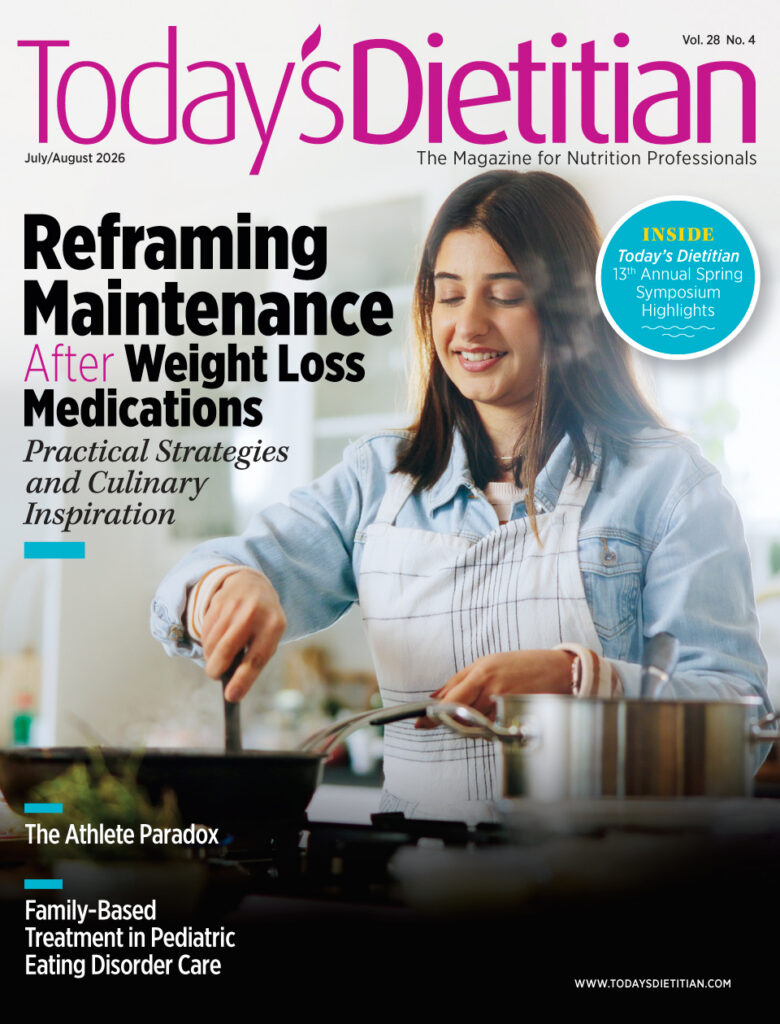
Explore the latest issue of Today’s Dietitian, featuring insights on weight loss medications, insulin resistance in athletes, eating disorder treatment, food as medicine, and more.
Department
Fortified foods have helped prevent serious nutrient deficiencies for generations. Learn how fortification supports public health, fills nutrient gaps, and complements a balanced diet.
Explore the school nutrition trends shaping cafeterias in 2026, from updated meal standards and plant-forward menus to global flavors, food allergies, and operational challenges.
Paula Quatromoni, DSc, RD, discusses eating disorders in athletes, barriers to effective treatment, and why dietitians need better training in prevention, screening, and care.
Pasta is getting a nutritional makeover. Discover how brands are reimagining this familiar favorite with more protein, fiber, prebiotics, and functional ingredients—plus what dietitians should consider when recommending next-generation varieties.
In May, health care organizations from across the country mount an annual initiative as part of Women’s Health Month to prioritize and support women’s wellness through multiple avenues, including increasing visibility of health conditions affecting women.
In January 2026, the USDA and HHS released the 2025–2030 Dietary Guidelines for Americans (DGAs). A new visual pyramid was also unveiled, with the words “Eat Real Food” above it.
My deeply rooted Italian table began with Sunday suppers at my Sicilian grandparents’ home—Ellis Island Italians who carried their traditions with them into New York State kitchens. Like many families across the region and the country, I grew up with layered roots, moving between cultures not by intention, but by routine.
Many RDs are familiar with clinical, community, and private practice roles, but far fewer are aware of federal public health careers available through the US Public Health Service (USPHS). For more than 100 years, dietitians have served within the USPHS, contributing to the protection, promotion, and advancement of the nation’s health through leadership, service, and science.
Food insecurity remains a persistent public health issue in the United States, affecting approximately 13.5% of households in 2023. In Michigan, rates are slightly below the national average at 12.5%, or one in eight adults from 2021 to 2022.