


Today’s Dietitian
Vol. 28 No. 4 P. 44
Eating disorders will impact 31 million Americans—9% of the US population—in their lifetime, and one life is lost every 52 minutes as a direct consequence of an eating disorder.1
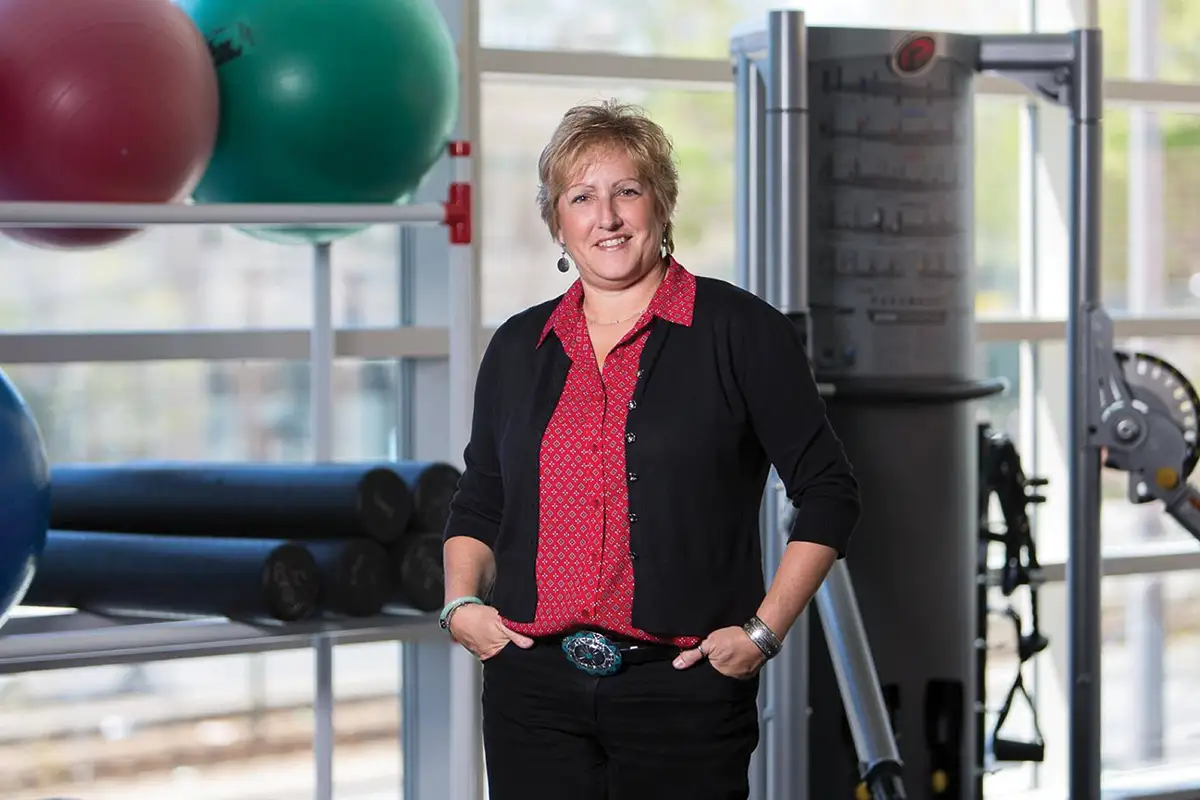
Despite these sobering statistics and their growing impact on diverse and vulnerable populations spanning girls, boys, men, women, athletes, and LGBTQ+ and other marginalized communities, eating disorders remain “hugely undiagnosed,” says Paula Quatromoni, DSc, RD, associate professor of programs in nutrition at Boston University. “Not everybody with the condition [or] at risk of disordered eating behaviors comes to clinical attention. Only one in 10 with a diagnosis gets treatment. We have a long way to go.”
Quatromoni, who specializes in the treatment of athletes with eating disorders, advocates for a collaborative, multidisciplinary approach that brings together coaches, trainers, sports medicine providers, sports psychologists, and nutritionists to build consensus around prevention and care guidelines. Her vision is to see eating disorder care integrated as a core competency in dietetics education and clinical training, annual screenings for athletes at all levels, and mandated education for coaches, athletes, and sports medicine staff.
She’s also fighting for wholesale change in how eating disorders are viewed and managed across health care.
“Access, affordability, and reimbursement are huge [challenges] in our field in general, but when it comes to eating disorders, it’s even worse because of the relapse rates and the length of the recovery journey. Rarely does one treatment cycle sufficiently treat an eating disorder,” she says. Research funding is also lacking.
It is crucial to raise awareness that athletes are two to three times more likely to develop an eating disorder, Quatromoni points out. “Athletes are perceived as invincible and almost superhuman. But they are highly vulnerable, and they stand to lose a lot when eating disorders in sport go untreated. There are life-threatening risks to health and mental health, and there can be career-ending injuries as well as unfulfilled performance potential.”
TD: What attracted you to nutrition and academics?
PQ: I knew I wanted to become a dietitian when I entered college. In high school, I researched nutrition and shadowed a dietitian at a VA hospital in Boston. I felt so drawn to this work. My dad was a high school science teacher, so I was strong in the sciences. I was an athlete. I ran track, and I studied ballet. I was raised in my Italian grandmother’s kitchen, so I developed a love of food and culture. Realizing that there was a career path that brought all that together was pretty amazing.
TD: What are your areas of expertise? What drew you to them?
PQ: I’m an RD with a doctoral degree in epidemiology, so I specialize in nutritional epidemiology, looking at how nutrition is related to chronic diseases, their treatment and prevention, and enhancing longevity. I’ve worked on the Framingham Heart Study for over 30 years. The cornerstone of my doctoral dissertation examined diet, cardiometabolic disease, and obesity in the Framingham Study cohort as it aged over the decades. That’s always been a strong part of my identity. It’s a world-renowned piece of epidemiology that I’m very proud to be affiliated with. When I moved to the main campus at Boston University to teach in the dietetics program, I established a collaboration with BU athletics to build a sports nutrition consult service. In 2004, there were very few sports dietitians on college campuses. There was an opportunity to work with a freshman runner with an eating concern. That opportunity changed the trajectory of my career and provided the foundation for what we built.
TD: You’ve done pioneering work in sports nutrition consulting for collegiate athletes. How has it evolved over the years?
PQ: More research and clinical work are being done as nutrition has been recognized as an essential component of sports science and medicine. Much of the original work focused on female athletes and the female athlete triad. We now also understand the male athlete triad. In 2014, the REDs model was published, expanding our understanding of the health and performance impact of relative energy deficiency in sport. These conditions affect all genders of athletes, so bringing male and trans athletes into the conversation has been an important evolution.
TD: What are the challenges athletes face in terms of proper nutrition?
PQ: Our early work found that female athletes are potentially vulnerable to all the same bio-psycho-social risk factors for an eating disorder as nonathlete females, plus factors unique to the sports environment that significantly increase their risk—low sports nutrition knowledge, diet culture, performance and appearance pressures, body image concerns, revealing uniforms, perfectionism, coaching interactions, highly critical feedback, sports injuries, and tightly controlled environments in which athletes train, live, travel, and compete. Inside sports, disordered eating behaviors become role modeled and are highly contagious among athletes seeking a competitive edge. We later replicated that research with male athletes and found similarities and differences, including the negative influence of social media on men’s body image, dieting, and exercise behaviors. Male athletes often suffer in silence due to low social support networks, stigma, and stereotypes that endorse the faulty belief that eating disorders are “a woman’s condition.” It’s only recently that we’ve had mental health counselors and greater access to dietitians inside athletics. Still, they are woefully understaffed, and we need more research to identify best practices. For example, trans athletes have not been included in the eating disorders in sport research, yet they have additional risk factors related to body image, minority stress, and other psychosocial issues that amplify their risk. Most people cannot recover from an eating disorder without professional help. This makes access to qualified providers essential in sports. Nutrition education, nutritional counseling, and eating disorder prevention are the cornerstones of this work. Screening, early detection, referral, and timely professional treatment are the keys to recovery.
TD: What are some of the most important things for RDs to know when working with athletes at risk for disordered eating?
PQ: That no sport is immune, and we should be looking for it everywhere. It’s not just about the gymnasts, runners, swimmers, wrestlers, and dancers. Athletes in every sport and at every level of competition are vulnerable. Every dietitian should assume that any client sitting in front of them may have some degree of disordered eating. I love this concept of “universal precautions,” that we need to go looking for this and not assume that our client isn’t experiencing something. Get advanced training and senior mentorship to do this important work.
TD: What has research revealed about binge eating that some might find surprising?
PQ: I recently completed two studies with very different demographics. One was with middle-aged women with type 2 diabetes in treatment for binge eating disorder, conditions that tend to coexist. People with type 2 diabetes are often coerced into weight loss as the only treatment strategy and are ashamed to admit when restrictive dieting causes them to experience binge eating. Once they receive treatment for the binge eating disorder and adopt a consistent eating plan that gives them permission to eat, diabetes management improves substantially, even without weight loss. The other study was with members of the LGBTQ+ community in eating disorder treatment. People in this community are at significantly higher risk of binge eating and other eating disorders. We saw more atypical neurodevelopment and ARFID [avoidant/restrictive food intake disorder] in our study sample, but also people receiving treatment in medical systems where they were actually being harmed because the care was not gender-affirming. They were not making progress towards recovery until they came into a gender-affirming program. The impact on their lived experience was tremendous.
TD: What should RDs know about working with clients at risk for binge eating disorder?
PQ: There are screening tools to proactively screen for binge eating disorder. Unfortunately, not all dietitians have the training or confidence to do eating disorder work, so building your referral network is important for connecting your client to the right provider. Because it hasn’t been part of traditional dietetics education and training, those who want to work in this niche must get the knowledge and skills on their own through conferences, webinars, courses, supervision, and professional education. That costs money, so after investing in bachelor’s and master’s degrees and an unpaid internship, we still need to pay more to be trained for this work.
TD: Why is it imperative that we fight for better access to, and insurance coverage of, disordered eating?
PQ: There is a lot of recidivism in eating disorders. Most people don’t receive sufficient treatment because it’s poorly reimbursed and inaccessible. Some states don’t have higher levels of care for eating disorders, so people literally must move away from home to get it. It can bankrupt families. People do recover, but it requires a lifelong commitment to recognizing when a step back into treatment is needed. There are many triggers throughout our lifecycle because eating disorders are maladaptive coping mechanisms. Anytime the stress in your life exceeds your ability to cope, it puts you at risk.
TD: What does your typical work week look like?
PQ: I have tremendous autonomy. I’m in the classroom a couple of days a week and do a lot of student-facing work, research supervision, and mentoring. I’m very involved in graduate recruitment. I also collaborate with colleagues in Italy and researchers in Framingham, do a lot of paper and grant writing, and speak at conferences. I’m involved in Sports and Human Performance Nutrition DPG and advise the boards of a couple of nonprofit organizations.
TD: What do you do in your downtime?
PQ: I live on Cape Cod, so I love to walk on the beach. It’s good for my mental health. I also love reading, traveling, and cooking. I’m Italian, so I love feeding people.
TD: What are some of your favorite meals or foods and why?
PQ: My favorite vegetable is eggplant; when I’m in Italy, I eat it most days. It reminds me of my great grandmother’s kitchen. I love Mediterranean cuisine, and I teach a course on the Mediterranean diet every summer in Italy.
TD: What are your favorite hobbies and why?
PQ: I love country line dancing. Don’t ask me how many pairs of cowboy boots I own! I became a grandmother last year, and babysitting my two grandsons is my absolute favorite hobby.
TD: If we were to peek into your pantry or refrigerator, what would we find?
PQ: Lots of berries and produce in general. Ice cream and gelato. Mediterranean staples like eggplant, olives, and garlic. Chocolate and nuts, and, of course, pasta, risotto, and plenty of carbs.
— Elizabeth S. Goar is a freelance health writer based in Benton, Wisconsin.
Reference
1. The social and economic cost of eating disorders in the United States of America: a report for the strategic training initiative for the prevention of eating disorders and the Academy for Eating Disorders. Deloitte Access Economics website. https://hsph.harvard.edu/wp-content/uploads/2024/10/Social-Economic-Cost-of-Eating-Disorders-in-US.pdf. Published June 2020.