

Artificial sweeteners, also called alternative, nonnutritive, and low- or no-calorie sweeteners, are a popular ingredient in many foods and beverages.
Cover Story
Making sense of dietary supplements (DS) and knowing how and when to recommend them can be a complicated matter for all dietitians.
Artificial intelligence (AI) is here and will be a major part of transforming health care, which is predicted to change more in the next decade than it has in the previous century.
In 1961, researchers Leonard Hayflick, PhD, and Paul Moorhead, PhD, observed that human cells could only divide a limited number of times before they became unable to continue to do so.
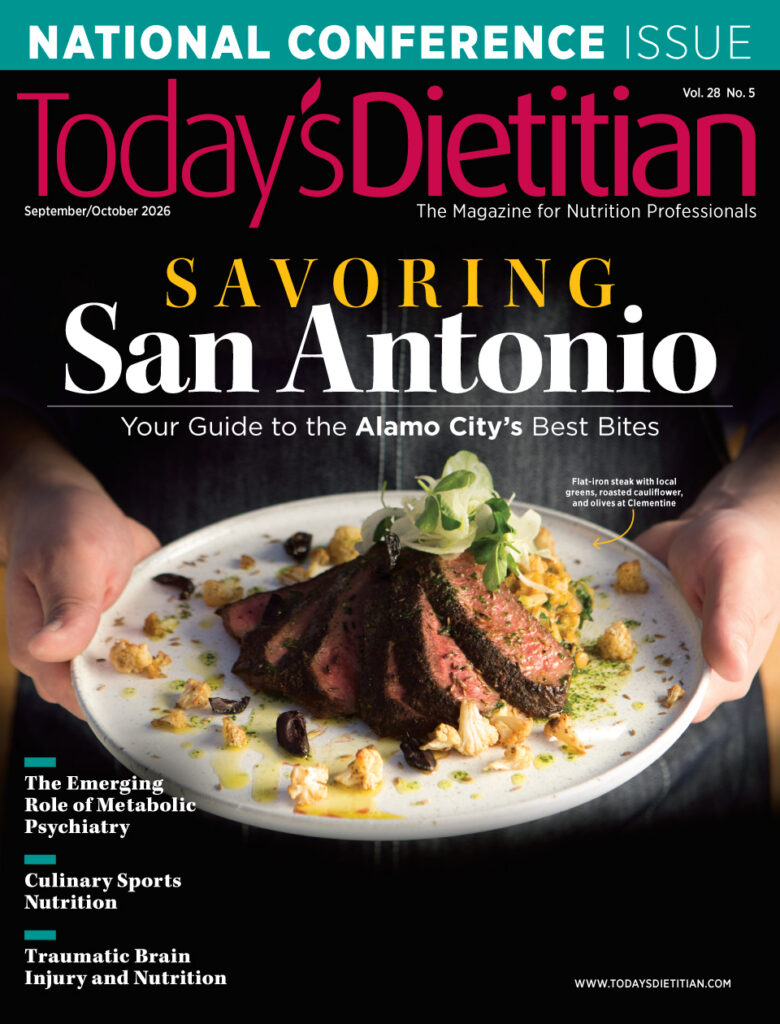
If you’re headed to FNCE®, get ready to enjoy award-winning and more casual restaurants that make the most of locally sourced foods across a range of cuisines.
It’s well established that eating a nutrient-dense diet, engaging in appropriate types and amounts of physical activity, sleeping well, not smoking, and managing other sources of stress support cardiovascular health.
Wine has a long history of use in the Mediterranean region, dating back to Neolithic and Biblical times.
The consumption of long-chain polyunsaturated fatty acids (PUFAs), particularly omega-3 fatty acids, is essential to healthy infant and toddler growth and development.
If your clients and patients ask you about red yeast rice, also known as Hong Qu, Hon-Chi, Anka, or red Koji, and whether they should take it to lower their cholesterol levels, you may want to read on.
Humans are complex, and part of that complexity comes from the interplay of mind and body.