

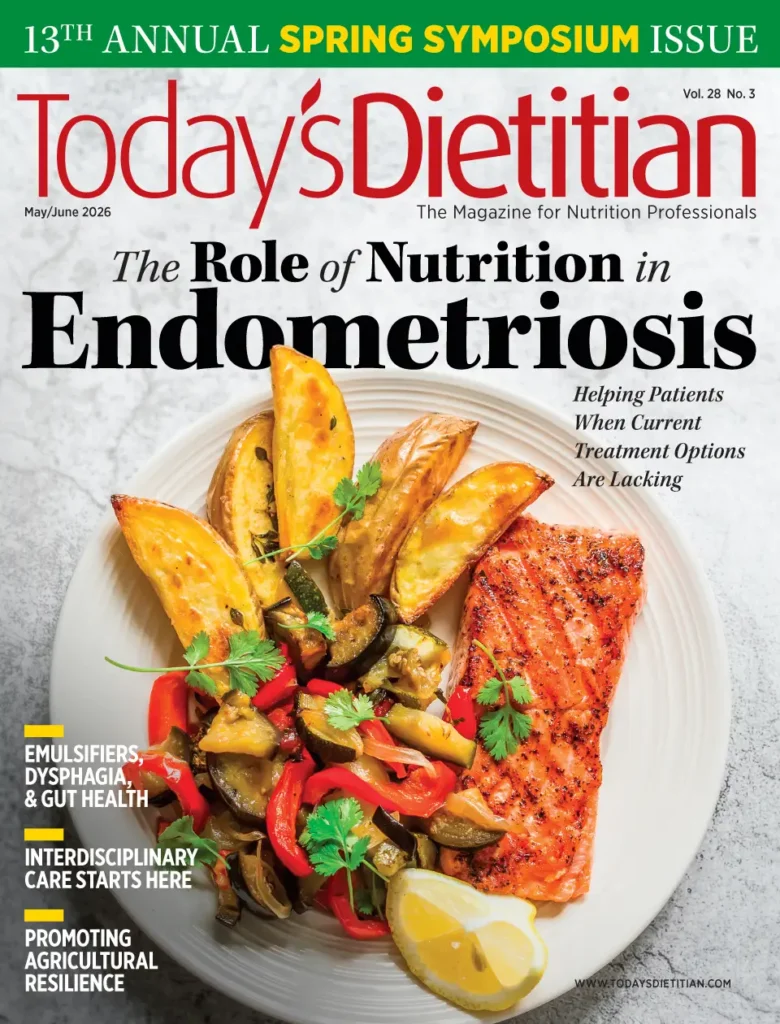
Certain dietary patterns may reduce symptom severity by reducing inflammation and modulating hormone levels. RDs with expertise share clinical wisdom for patients diagnosed with this challenging condition.
May/June 2026
Cover Story & Features
Although emulsifiers play an important part in food manufacturing, researchers are asking whether they may also negatively impact eosinophilic esophagitis, dysphagia, and irritable bowel syndrome.
Dietitians can complement medical resident training through educating up-and-coming providers about the clinical necessity of nutrition therapy, modeling collaborative care, and reinforcing the value of referrals to nutrition experts.
Amid Farm Bill negotiations and funding considerations for conservation and climate programs, RDs are poised to make a difference as trusted experts on the intersection of food systems and nutrition factors impacting health.
This continuing education course details the role of GLP-1 injectables in managing chronic conditions and overweight/obesity, common concerns and side effects, and current MNT approaches for patients using these medications.
Departments