




Today’s Dietitian
Vol. 28 No. 3 P. 46
After years of explosive trial, sales of plant-based meat alternatives have leveled off or declined.1 Flavor and texture challenges, paired with a growing unease about overprocessing, made it difficult for the category to sustain momentum. At the same time, meat has muscled its way back on menus. Sales of beef, poultry, and pork have hit record highs, as shoppers continue to prioritize protein.2
Animal proteins got an extra boost in the updated food pyramid, which features a heavily marbled steak, package of ground beef and a whole chicken at the top. Even so, nearly one in four consumers in the United States say they’re interested in cutting back on meat.3 Although the approach is more about limiting, not quitting.
Evolution of Plant-Based Meats
Plant-based meats may have stumbled, but they are not disappearing. Instead, the category is being reimagined for broader appeal.
“Most plant-based meat products so far have been early versions aimed at niche audiences rather than everyday meat eaters,” says Bruce Friedrich, founder and president of the Good Food Institute and author of the new book Meat.
“That doesn’t mean the idea failed. It means the work isn’t finished. Every major technology—from cars to computers—started out expensive and imperfect. When products improve and prices come down, adoption follows.”
The next phase of meat alternatives focuses on simpler ingredients, whole food formats, and blended or hybrid meats for flexitarians. Nearly one-quarter of consumers identify as “meat reducers” or flexitarians.3 Growth of the category is pointing to the “open omnivore,” or meat-eaters who are willing to try plant-based meat alternatives.
Here’s a look at the future of meat alternatives, along with notable brands.
Whole Food Plant Alternatives
Putting the plant back in plant-based is predicted to dominate the next wave of innovation. Consumers are increasingly drawn to plant-forward products built around legumes, mushrooms, nuts, grains, and visible vegetables instead of more highly processed products designed to mimic meat.4
- Actual Veggies. Frozen veggie burgers made with clearly identifiable ingredients like purple sweet potato, broccoli, kale, chickpeas, black beans, mushrooms, and quinoa. Veggieballs in Southwestern black bean and eggplant chickpea varieties are available for foodservice.
- Dr. Praeger’s. A legacy brand that focuses on vegetable-forward burgers, including crunchy cauliflower, mushroom risotto, Southwestern sweet potato, and California veggie burgers made with carrots, zucchini, peas, broccoli, and other vegetables.
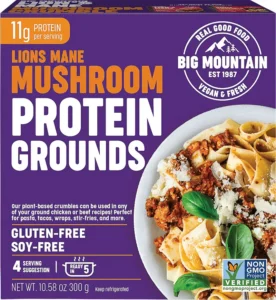
- Big Mountain Foods. Canadian brand offering lion’s mane mushroom burgers and crumbles, mushroom bites, cauliflower-based crumbles, and Greek-inspired vegan sausages made with spinach and fava feta.
Blended or Hybrid Meats
Blended products that combine meat with plant ingredients are emerging as a popular option for flexitarians. These products allow people to reduce meat without giving it up entirely. While some early hybrid brands failed, research suggests blended meats are preferred over fully plant-based products and may help broaden the consumer base.5
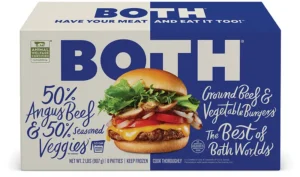
- Both by 50/50 Foods. Marketed as “the best of both worlds,” these burgers contain 50% ground beef and 50% vegetables including mushrooms, onions, broccoli, and cauliflower.
- Perdue Chicken Plus. A mainstream retail example, these nuggets and tenders blend chicken with ¼ cup cauliflower and chickpeas per serving.
- Spare Burger by Spare Food Co. Available for foodservice, Spare Burger blends 70% beef with 30% surplus vegetables, addressing both meat reduction and sustainability with the use of upcycled plant ingredients.
Next-Gen Meat Alternatives
Food technology is ushering in a new era of next-generation meat alternatives including cultivated meat, 3D printing, and fermentation. While not all of these products are widely available, they offer a glimpse into the future of protein.
Cultivated Meat
Cultivated meat—also known as cultured or cell-based meat—is grown from animal cells outside the animal, enabling meat to be produced without conventional livestock farming. Unlike plant-based alternatives, cultivated meat is biologically identical to conventional meat, offering a comparable nutrient profile and sensory experience, yet with less saturated fat and environmental impact.
The sector has seen both momentum and setbacks. Some startups have struggled with funding and political resistance with bans in several states including Texas, Nebraska, Indiana, Mississippi, Alabama, and Florida. A few companies, even after regulatory wins, have shuttered operations.
Cultivated meat has been approved for sale in the United States, Singapore, Australia, New Zealand, and Israel, although distribution is limited.
- UPSIDE Foods. The first cultivated meat company in the world and a pioneer in cultivated chicken.
- GOOD Meat. Part of Eat Just Inc, one of the first to achieve regulatory approval for commercial sales of cultivated chicken.
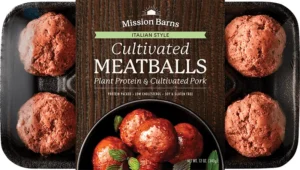
- Mission Barns. Makers of cultivated pork including meatballs, bacon, pepperoni, and sausage.
- Vow. Australian company making cultivated gourmet products including quail and foie gras.
- Wildtype. World’s first cultivated salmon.
“Cultivated meat is arguably one of the most studied foods in terms of safety ever brought to market,” says Eric Schulze, PhD, chief scientific and technology officer at Evergreen Select, a cultivated meat company in Los Angeles. Schulze is a former FDA regulator and was previously the head of product development at UPSIDE Foods.
Schulze says scaling production remains the biggest challenge for most companies, along with navigating state-level bans. He wants to see federal investment and more consumer education about cultivated meat.
3D Printed Meat
3D printed meat uses food-grade printers to layer proteins and fats—derived from plant-based ingredients, cultivated cells, or hybrid formulations—into structures that mimic the texture and mouthfeel of whole cuts of meat.
- Redefine Meat. An Israeli company that uses 3D printing to create plant-based steaks, ground beef, shawarma, pulled pork, and bratwurst for chefs and home cooks.
- Steakholder Foods. This Israeli firm produces plant-based and cultivated proteins including beef steaks, white fish, shrimp, salmon, and eel via 3D printing technology.
Mycelium-Based Proteins
Mycelium (the root system of fungi) is emerging as one of the most promising platforms for the next generation of meat alternatives. Because mycelium grows quickly through fermentation, it can be produced efficiently with relatively low land, water, and energy inputs. Mycelium delivers a fibrous, meatlike texture that appeals to consumers looking for cleaner labels and foods that feel closer to nature.
- Nature’s Fynd. This Chicago-based company uses fermentation to grow Fy, a fungi protein originally discovered in Yellowstone National Park. Products include Fy Bites made with Fy protein and vegetables, and meatless breakfast patties.
- Prime Roots. Headquartered in Berkeley, California, Prime Roots makes plant-based bacon, pepperoni, and deli meats from a mycelium called koji, which has been used in Japanese fermentation for centuries to make sake, miso, and soy sauce.
- Quorn. One of the earliest pioneers of mycoprotein, Quorn has used fermented fungal protein for decades. While long established in the United Kingdom and Europe, the brand continues to evolve its US offerings, which include meatless burgers, grounds, chicken patties, nuggets, and fillets.

— Janet Helm, MS, RDN, is the founder of Food at the Helm, a strategy and communications consultancy focused on food brands.
References
1. Flatland A. The evolution of plant-based: the next wave. SPINS website. https://www.spins.com/resources/report/the-evolution-of-plant-based-the-next-wave/. Accessed January 20, 2026.
2. Sales at record high, Americans view meat as part of a healthy, balanced lifestyle Power of Meat analysis marks 20th anniversary at Annual Meat Conference. Meat Institute website. https://meatinstitute.org/press/sales-record-high-americans-view-meat-part-healthy-balanced-lifestyle-power-meat-analysis. Published March 24, 2025. Accessed January 20, 2026.
3. Protein market trends: growth and global shifts. Innova Market Insights website. http://www.innovamarketinsights.com/trends/protein-market-trends/. Published July 21, 2025. Accessed January 20, 2026.
4. Inside the 2025 Plant-Forward Opportunity Report. Datassential website. https://datassential.com/resource/plant-forward-opportunity-report-2025/. Accessed January 20, 2026.
5. Adhikari S, McFadden BR, Malone T, Lusk J. Plant-based versus animal-based proteins: does it have to be either/or? J Agric Resour Econ. 2025;50(1):1-20.