
Advertorial

Sponsored by

How to Prepare Chicken Noodle Soup for Texture-Modified Diets with Confidence

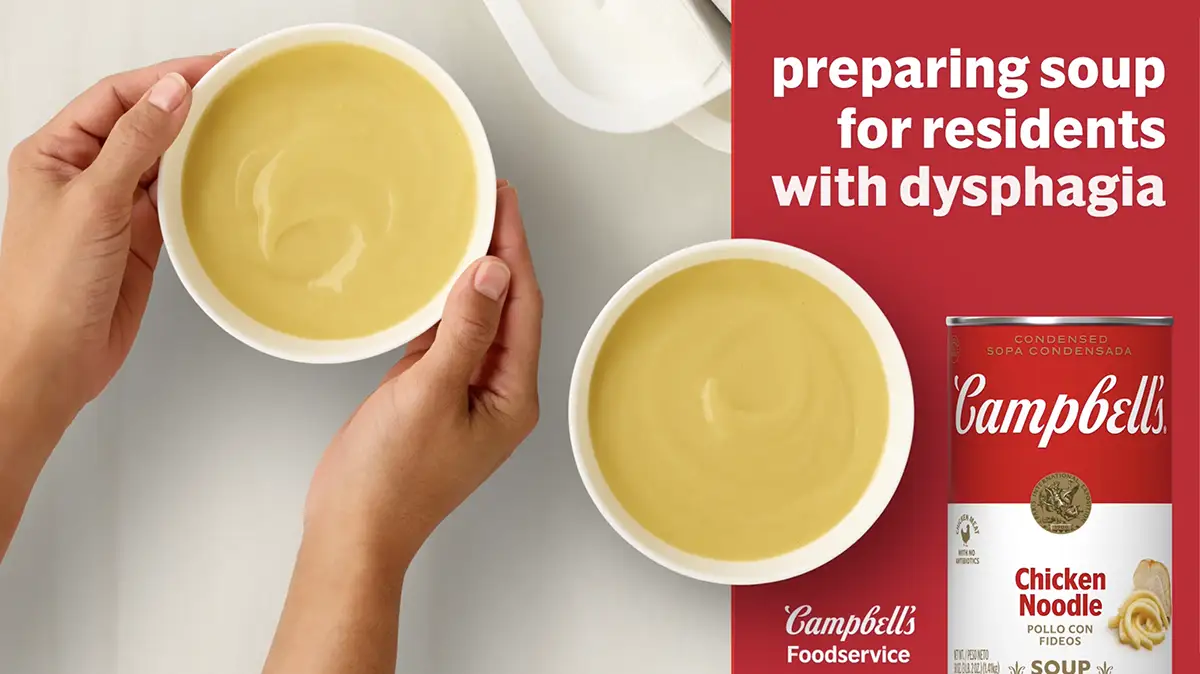
Preparing foods for individuals with dysphagia requires a careful balance of safety, consistency, and appeal. This video demonstrates how to adapt a familiar favorite— Campbell’s® Condensed Chicken Noodle Soup—into a texture-modified format that aligns with IDDSI guidelines, while still delivering the comfort and flavor diners expect.
The process begins with a product many operators already know and trust: condensed chicken noodle soup. Using a recognizable base is important in healthcare environments, where familiarity can support intake and overall satisfaction. However, in its standard form, chicken noodle soup presents a challenge for dysphagia diets due to its mixed consistency—containing both liquid and solid components like noodles and chicken. These varying textures can increase the risk of swallowing difficulties if not properly modified.
To address this, the video walks through how to transform the soup into a safer, more uniform consistency. The first step is heating the soup according to standard preparation guidelines to ensure food safety and proper handling. Once heated, the soup is then modified to meet specific texture requirements. This typically involves blending the contents to break down solids into a smoother, cohesive mixture. By doing so, operators can eliminate the separation between liquid and solid elements, which is critical for meeting IDDSI standards.
After blending, the consistency is evaluated and adjusted as needed. Depending on the target IDDSI level, additional steps may be required, like straining to remove any remaining particles or adding thickening agents to achieve the appropriate texture. The goal is to create a product that’s smooth, uniform, and easy to swallow—without lumps or inconsistencies that could pose a risk. This step underscores the importance of testing and verifying texture before service, ensuring the final product meets the required safety standards.
What makes this approach especially valuable for operators is its practicality. Rather than preparing entirely separate meals for those on texture-modified diets, this method allows kitchens to adapt a single base recipe across multiple dietary needs. This not only saves time but also helps streamline inventory and reduce complexity in busy foodservice environments. Using a product like condensed chicken noodle soup as a starting point further supports consistency across batches and staff members, which is critical in settings with varying levels of culinary training.
In addition to operational efficiency, the approach also supports better dining experiences. Texture-modified diets can sometimes result in foods that feel repetitive or unappealing, which may negatively impact consumption. By starting with a well-loved dish and carefully modifying it, operators can maintain the flavor profiles diners recognize and enjoy. This can help improve satisfaction and encourage better nutritional intake—an important consideration in healthcare settings where maintaining health and well-being is a top priority.
The video also reinforces the broader importance of standardization when preparing texture-modified foods. Following established frameworks like the International Dysphagia Diet Standardisation Initiative ensures that all members of the care team—from clinicians to kitchen staff—are aligned in how foods are prepared and served. Consistency in preparation reduces the risk of errors and helps ensure that each dish meets the necessary safety requirements every time it is served.
Ultimately, this demonstration highlights a simple but effective approach to dysphagia-friendly cooking: start with a trusted product, apply consistent modification techniques, and verify the final texture before serving. By doing so, operators can deliver meals that are not only safe but also comforting and enjoyable. It’s a practical solution that supports both the clinical needs of diners and the operational realities of foodservice teams.
For operators looking to improve their approach to texture-modified diets, this method provides a clear, repeatable process that can be applied across a variety of menu items. It shows that with the right techniques and tools, it’s possible to create meals that meet safety standards without sacrificing quality or appeal—helping ensure every diner receives a positive and nourishing experience.