


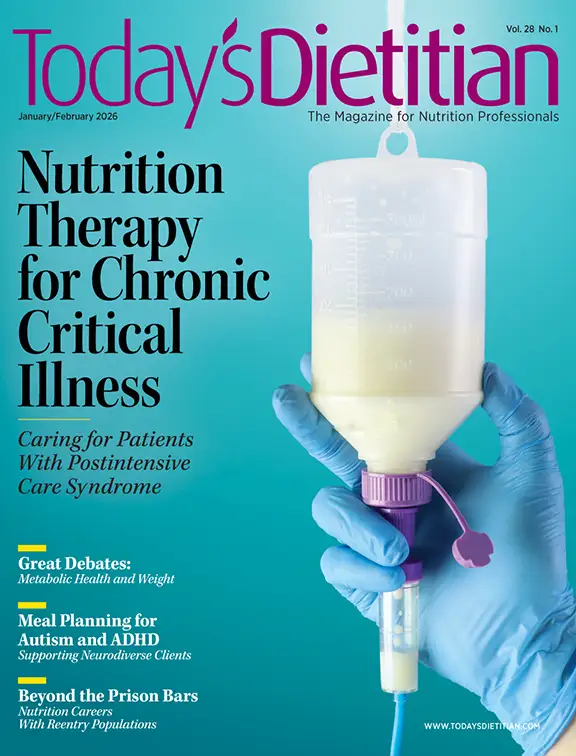
Patients with chronic critical illness face profound nutrition challenges after the ICU. Targeted nutrition therapy plays a critical role in recovery, functional improvement, and long-term outcomes.
January/February 2026
Cover Story & Features
The concepts of metabolically healthy obesity and metabolically unhealthy normal weight challenge BMI-centered thinking, highlighting why metabolic health, behaviors, and bias-free care matter more than body size alone.
Traditional meal plans often fail neurodivergent clients. Flexible, sensory-aware frameworks can help autistic and ADHD individuals build sustainable, satisfying eating routines that honor autonomy and real-life needs.
Dietitians play a critical but often overlooked role in reentry programs, where nutrition education can support chronic disease management, food security, and health equity for formerly incarcerated individuals.
Time-restricted eating has gained attention in oncology nutrition, with emerging research suggesting potential benefits for cancer risk reduction and metabolic health—though evidence in active cancer care remains limited.
Departments