


Today’s Dietitian
Vol. 28 No. 1 P. 14
Among the American public, there is a growing concern about the safety of various contaminants, additives, and other compounds found in food products—like unintended heavy metals and certain deliberate food additives. According to the International Food Information Council’s Food and Health Survey focusing on food and ingredient safety, overall confidence—around 55%—in the US food supply is down significantly for two consecutive years.1 Those who reported being “very confident” (11%) had decreased significantly for three consecutive years, approaching the 2016 historical low. In addition, compared with 2023, more people say understanding how food companies (42%) and the government (41%) ensure that food is safe, and seeing stricter regulations (41%) would increase their confidence in the safety of the US food supply.1
In addition, the current goals of the US Department of Health and Human Services include removal of petroleum-based food dyes, overhauling GRAS (generally recognized as safe) standards, and bringing increased transparency to consumers regarding their food. As a result, many states are adding warning labels to foods related to certain food dyes, partially hydrogenated oils, preservatives such as BHA (butylated hydroxyanisole) and BHT (butylated hydroxytoluene), and other additives flagged by international health authorities.2 This article will highlight the various warning labels proposed by specific states, discuss the potential effects of these labels on consumers and the food supply, and provide recommendations for nutrition professionals in practice.
The Purpose of New Labeling
With so many Americans skeptical about the food supply, states claim the warning labels support consumer awareness and protection from harmful substances, enabling consumers to make informed choices by weighing the risks and benefits of specific ingredients. Furthermore, some states feel that current federal regulations are not sufficiently protecting consumers, especially with regards to additives and contaminants in food. Lastly, proponents argue that labels can help incentivize and put pressure on manufacturers to find safer alternatives or reformulate products.
Statewide Regulations
In 2023, California passed AB818, which bans the use of brominated vegetable oil, potassium bromate, propylparaben, and Red No. 3 in any food product for human consumption by 2027.3 A year later they passed AB2316 to remove foods from schools that contain certain dyes.3 Food products containing these dyes may be sold as part of a school event, if the sale occurs off school property or after the school day ends.
Since then, numerous states have passed or proposed legislation to require a warning label for food additives and other ingredients deemed potentially harmful. On June 22, 2025, Texas signed Senate Bill 25 requiring warning labels on food containing 44 additives such as titanium dioxide, Red 40, Yellow 5, and olestra by 2027. The bill required the warning label to state: “WARNING: This product contains an ingredient that is not recommended for human consumption by the appropriate authority in Australia, Canada, the European Union, or the United Kingdom.”4 In addition, Louisiana’s law beginning in 2028 will require food containing any of their listed 44 ingredients (which is different from Texas) to bear a QR code to a web page stating: “NOTICE: This product contains [insert ingredient here]. For more information about this ingredient, including FDA approvals, click HERE.” By the same date, any food service establishment preparing food using seed oil must display a notice saying: “Some menu items may contain or be prepared using seed oils.”5
Other states have banned specific lists of additives or ingredients that are served in school to children including California, West Virginia, Arizona, and Louisiana.5 Over 20 states introduced legislation restricting food chemicals they deem harmful. Some states are also attempting to define the term “ultraprocessed” in their legislation.5
Effects on the Food Supply
Although some food manufacturers have already removed certain synthetic dyes from their foods, a long list of additional additives that vary by state and require a warning label (or a ban) in that state may become overwhelming for food manufacturers. For example, food companies may choose not to distribute to specific areas—such as markets located on state boarders of states with a specific food ban. Even if the store is within the state where there is no ban, it may not be worth it to send the driver for fewer deliveries.
According to Samantha Cassetty, MS, RD, a nutrition and wellness expert, founder of Sam’s Plate, and coauthor of Sugar Shock, “Because these laws are occurring on a state-by-state basis, it is not practical for manufacturers to produce different formulations for different states. As a result, state laws are likely to influence nationwide product reformulation.
Another issue is food safety. The purpose of numerous food additives is preserving food, minimizing microbial growth, and keeping the foods safe to eat. Removing these additives may result in a decreased shelf life, more food waste, and increased risk for pathogenic microorganisms to contaminate food.
Safety of Additives and Other Ingredients
One of the main concerns expressed by food scientists and nutrition science experts, including RDs, is consumer confusion or even misinformation about food safety messaging. The negative claims regarding certain food additives and some other ingredients are often based on studies demonstrating associations without causation, particularly for endpoints such as ADHD, connected weakly with synthetic colors.6 Additionally, the amount of a given ingredient consumed plays a significant role in its potential adverse outcome. Some of the new label proposals don’t factor in dose-response effects and the impact that variable has. Scientists and experts with decades of experience and proper training are best equipped to weigh in on these decisions; however, they are unfortunately not often consulted.
Europe, the United States, and other countries all use different principles to evaluate toxicity of additives. Europe uses a hazard-driven precautionary principle, while the US regulatory system for foods and food additives is based on modern risk assessment principles, where animal-derived toxicity results are evaluated based upon the true relevance to humans, including the realistically lower daily intake levels of food additives compared with the massive doses fed in animal toxicity and carcinogenicity studies.
Consequences for Consumers
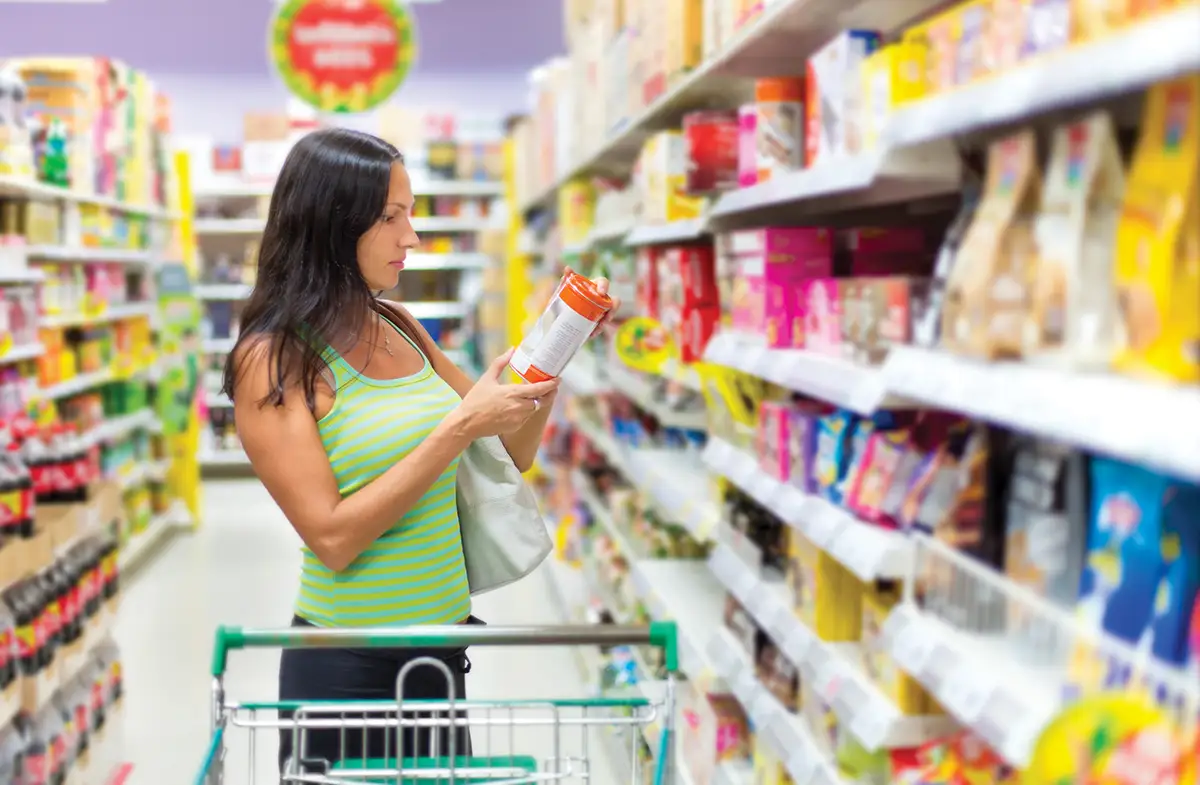
Unsurprisingly, with the surge in new warning labels for dozens of different ingredients, consumer confusion is expected to increase. For example, many yogurts (typically nonorganic) will carry warning labels in certain states; however, in 2024, the FDA approved a qualified health claim for yogurt, recognizing a potential link between this dairy aisle staple and a reduced risk of type 2 diabetes.7 This health contradiction found on just one food label among many is sure to lead to consumers scratching their heads when walking down the grocery aisle. Another example is the use of cane sugar instead of high fructose corn syrup in soda. Without a meaningful biochemical difference, this switch may instill a false sense of security and doesn’t relay the evidence-based recommendation to decrease overall soda consumption, which is the top source of added sugar in the American diet per the 2025-2030 Dietary Guidelines for Americans.8
Cassetty says, “If products are reformulated, consumers may benefit from improved ingredient profiles, which could lead to reductions in long-term exposure to controversial additives.” However, this transition may also introduce new ingredients or alter product taste, texture, or price. Increasing prices can have a dramatic impact on consumers who have already been seeing food costs increase.
Recommendations for RDs
Although statewide bans don’t necessarily always follow the scientific evidence, Cassetty believes that nutrition professionals can use it as an opportunity to redirect attention to whole or minimally processed eating patterns, which naturally limit exposure to questionable additives and support better health outcomes.
Cassetty also points out that because consumers will encounter headlines and social media claims that may sensationalize the harm of these additives, RDs can position themselves as experts by providing evidence-based clarity and help clients make informed, personalized choices. Dietitians should also be prepared to address questions including differences in taste, shelf life, texture, and price that may result from reformulation. According to Cassetty, this may mean educating consumers about different storage methods or more affordable purchases or food preparation methods.
Are these warning labels really going to help people eat healthier? Some experts argue that efforts focused on more comprehensive strategies for change may be more meaningful. Cassetty recommends a broader nutrition policy strategy that includes teaching kids how to cook and improving access to nutritious, affordable, whole foods. “[Policy makers and health professionals] need to be looking at nutrition policy as a whole by combining ingredient-focused policies with these types of broader efforts.”
— Toby Amidor, MS, RD, CDN, FAND, is founder of Toby Amidor Nutrition (tobyamidornutrition.com) and a Wall Street Journal bestselling author. She’s written 12 cookbooks, including Healthy Living High-Protein Cookbook (June 2026) and Health Shots: 50 Simple Tonics to Help Improve Immunity, Ease Anxiety, Boost Energy, and More (November 2024). She’s also an award-winning media dietitian, spokesperson, and nutrition expert for FoodNetwork.com and a contributor to U.S. News and other national outlets.
References
1. 2025 IFIC food & health survey: a focus on food & ingredient safety. International Food Information Council website. https://ific.org/research/2025-ific-food-health-survey/. Updated July 28, 2025.
2. Make America healthy again. US Department of Health and Human Services website. https://www.hhs.gov/maha/index.html. Accessed October 20, 2025.
3. Executive Department State of California. Executive order N-1-25. https://www.gov.ca.gov/wp-content/uploads/2025/01/2025-1-1.Revised-Healthy-Foods-EO-Final-Gov-Signed.pdf. Published January 3, 2025. Accessed October 20, 2025.
4. Texas Senate Bill 25. LegiScan website. https://legiscan.com/TX/text/SB25/id/3247967. Updated September 1, 2025. Accessed October 19, 2025.
5. Duvall M, Sachs A, Zietman J, Johnson L. States join FDA in the MAHA war on food ingredients. Beveridge and Diamond website. https://www.bdlaw.com/publications/states-join-fda-in-the-maha-war-on-food-ingredients/. Published September 4, 2025. Accessed October 20, 2025.
6. Amidor T. Food for thought: food additive controversies. Today’s Dietitian website. https://www.todaysdietitian.com/food-for-thought-food-additive-controversies/. Published June 1, 2025. Accessed October 22, 2025.
7. Amidor T. Ask the expert: obtaining product health claims. Today’s Dietitian website. https://www.todaysdietitian.com/ask-the-expert-obtaining-product-health-claims/. Published August 1, 2024. Accessed October 22, 2025.
8. Dietary Guidelines for Americans, 2020-2025. Top sources and average intake of added sugars: US population ages 1 and older. https://www.dietaryguidelines.gov/sites/default/files/2021-11/DGA_2020-2025_TopSourcesAddedSugars.pdf