|
E-Newsletter • October 2026 |
▼ ADVERTISEMENT

|
Editor's E-Note
The Double-Edged Sword of Data
When is more data a good thing, and when is it just more? That’s an existential question more dietitians are facing as more patients and clients show up with reams of data from apps, wearable trackers, and the latest home test kits. In this month’s E-News Exclusive, we look at the pros and cons of personalized nutrition technology, and how this tech is reshaping dietetics as RDs increasingly step into the role of “data translator.” We also look at how RDs play an essential role in further personalizing AI-generated recommendations by taking into account the many social, cognitive, and psychological factors that AI can’t.
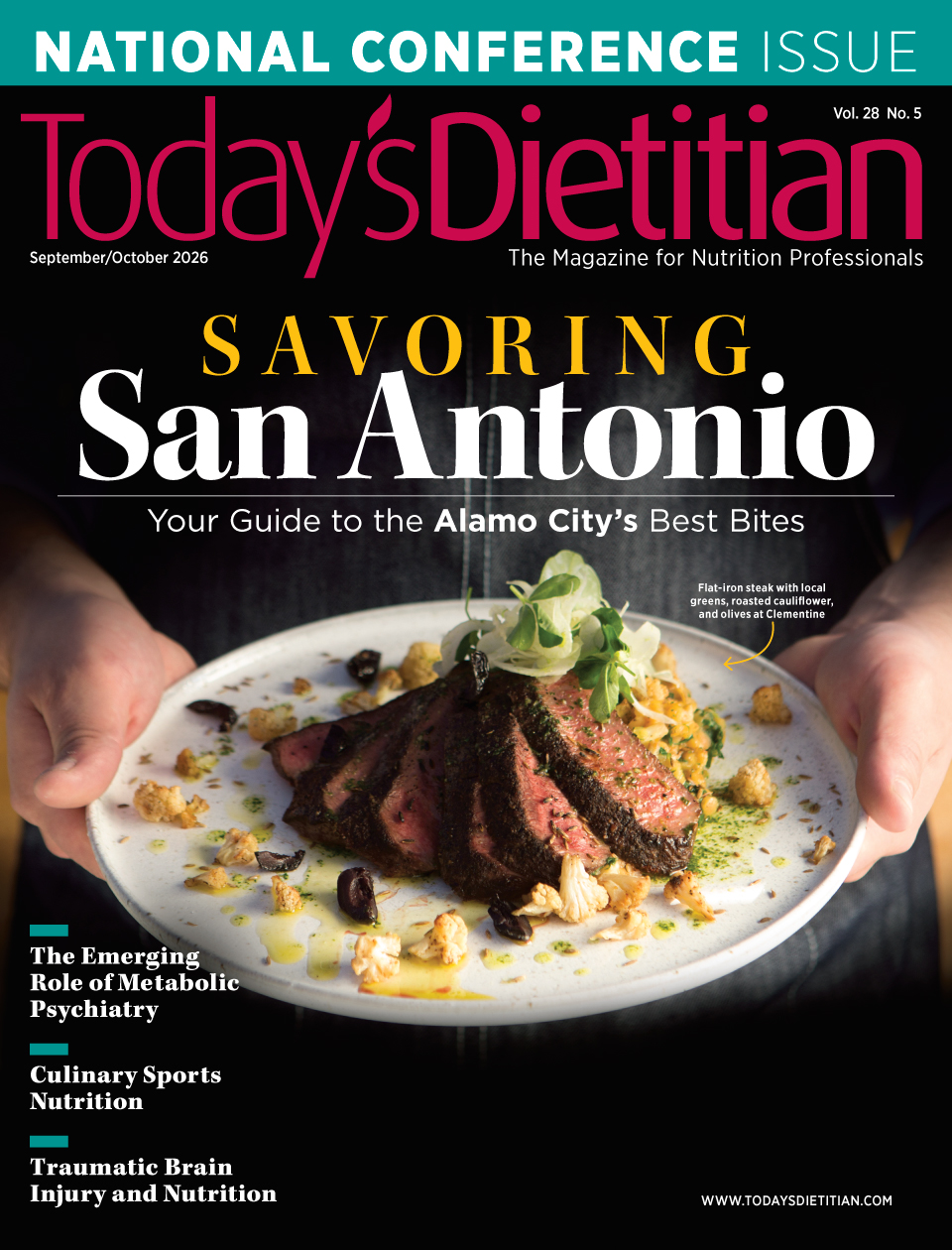
After reading the article, visit TD’s website at www.TodaysDietitian.com to read the digital edition of our September/October issue, featuring our cover story, “Savoring San Antonio.” If you’ll be attending FNCE® this month, this is your guide to choosing your own food adventure when you’re tired of Expo Hall food. You’ll also find features on the emerging role of metabolic psychiatry, traumatic brain injury, and nutrition support, and get a road map—with recipes and menus—for successfully curating cooking classes for student athletes.
Please enjoy the E-Newsletter and give us your feedback at TDeditor@gvpub.com, and don’t forget to like us on Facebook and follow us on X, formerly known as Twitter.
— Carrie Dennett, MPH, RDN, editor |
|
|
| In This E-Newsletter
|
▼ ADVERTISEMENT
|
|
|
|
▼ ADVERTISEMENT

Navigating Personalized Nutrition Tech in Dietetic Practice
By Carrie Dennett, MPH, RDN
While there’s no single definition of personalized nutrition, in 2020, the American Nutrition Association proposed defining it as “a field that leverages human individuality to drive nutrition strategies that prevent, manage, and treat disease and optimize health.”1 In 2021, Holly Nicastro, PhD, MPH, coordinator of the NIH’s Nutrition for Precision Health program, defined it as “the goal of individualized, actionable dietary recommendations that help people decide what, when, why, and how to eat to optimize their health and quality of life.”2
Nutrition for Precision Health is “powered by” the All of Us research program,3,4 and has the goal of moving away from population-based nutrition advice toward personalized nutritional guidance based on the complex interactions between an individual’s diet, genes, proteins, microbiome, metabolism, environment, and lifestyle. It also seeks to use AI to develop algorithms to predict individual responses to specific foods and dietary patterns.5
Five years later, all of that has come to some sort of fruition, as evidenced by the rapid explosion of direct-to-consumer (DTC) testing kits, AI-driven meal planning apps, and wearable health tech. Today, many dietitians are finding that patients and clients don’t show up for sessions with a simple, handwritten food log anymore—they’re arriving with DNA profiles, AI-generated microbiome analyses, and continuous glucose monitor (CGM) graphs.
For dietitians, this data-rich landscape acts can be a double-edged sword. On one hand, personalized nutrition technologies offer new tools for patient engagement and metabolic insight. On the other, they introduce significant clinical challenges, including questionable scientific or clinical validity, increased health anxiety, and the assumption that algorithms can replace nuanced professional care. Dietitians may find themselves pivoting from nutrition counseling and education into the role of data translators, guiding patients safely through a sea of algorithmic noise.
▼ ADVERTISEMENT
 |
New Position Statement Linking Human Health and Planetary Health
The American College of Lifestyle Medicine (ACLM) has released a new position statement asserting that lifestyle medicine offers a practical, evidence-based framework to address both the chronic disease epidemic and the growing environmental challenges affecting health worldwide.
Written by ACLM's Global Sustainability Committee, the paper highlights the interconnected threats posed by climate change, biodiversity loss, environmental pollution, and the rising burden of chronic disease. The authors argue that many of today's most pressing health challenges stem from shared systemic drivers and require integrated solutions.
Study May Explain Why IBD Patients React to Foods They Once Tolerated
A new study published in Gastroenterology finds that gut inflammation can change the way gut bacteria break down food—possibly triggering immune reactions to foods that were previously fine to eat. The findings may help explain why so many people with inflammatory bowel disease (IBD) react badly to foods like dairy or gluten, even in remission.
IBD, which includes Crohn's disease and ulcerative colitis, is marked by flare-ups of severe inflammation, and many patients change their diets to manage symptoms, despite limited evidence that this helps. About two-thirds of IBD patients report food-related symptoms. Dairy, wheat, and fiber are the most frequently blamed triggers, but why they cause problems has remained unclear.
|
▼ ADVERTISEMENT

CPE Monthly
In the September/October issue of Today’s Dietitian, learn about the three phases of short bowel syndrome and the best practices for targeted nutrition interventions to help manage this condition. Read the CPE Monthly article, take the 10-question online test at CE.TodaysDietitian.com/CPEmonthly, and earn two CPEUs!
Couldn’t join us in Orlando for the 2026 Today’s Dietitian Spring Symposium?
You can still benefit from the event’s timely, practical education. Recorded sessions offer convenient, on-demand access to expert insights on important topics in nutrition and dietetics—wherever and whenever it works for you.
Keep building your knowledge while earning valuable continuing education credits. Choose a convenient Symposium Pack or purchase individual sessions and continue your professional development on your schedule.
2027 Spring Symposium
Less than 2 weeks remain to take advantage of early-bird savings on registration for the 14th Annual Today's Dietitian Spring Symposium. Join us April 25–28, 2027, in Las Vegas for four days of practical, evidence-based continuing education, nationally recognized speakers, meaningful professional connections, and memorable special events.
Registration rates increase on November 1st, so act now to take advantage of early-bird savings.
▼ ADVERTISEMENT
 |
Gut Friendly Recipes
Cooking isn’t easy for patients living with inflammatory bowel disease (IBD). The Gut Friendly Recipes resource from the Crohn’s & Colitis Foundation includes hundreds of recipes approved by dietitians who specialize in IBD. Users can filter by common allergens as well as different diets commonly used for IBD, and when they set up a free account, they can save favorite recipes and create weekly meal plans. |
In the November/December Issue
• Crafting Healthy Holiday Mocktails
• Great Debates: Functional Lab Testing
• Beyond Calcium: The Emerging Role of Fiber in Bone Health
• Postpartum Diet and Infant Colic |
|
|
COVER STORY
Savor San Antonio Cuisine
FNCE® is coming to San Antonio this month, and to prepare, Today’s Dietitian has found the best local spots for food-loving attendees—from barbecue to Tex-Mex and beyond.
FEATURE
The Emerging Role of Metabolic Psychiatry
Learn more about the potential benefits of the ketogenic diet in severe mental illness, an approach based on the theory that mental disorders are essentially metabolic disorders of the brain.
|
|
|
| Advertising Opportunities |
Have a product or service you want to market to nutrition professionals? Utilize the reach of Today’s Dietitian Magazine to accomplish your marketing goals. Email our experienced account executives today at sales@gvpub.com or call 800-278-4400 for more information.
|
| © 2026 Today’s Dietitian Magazine |
|
|