



Today’s Dietitian
Vol. 28 No. 1 P. 18
When I think about some of my favorite childhood memories, food is at the center. One specific cherished memory is staying at my Mammaw and Pappaw’s house and waking up to freshly baked bread that I then was able to top with soft butter and honey. It’s hard to say how many pieces of bread I would eat on those mornings, but I know my love for bread with butter and honey runs strong to this very day.
Food tells the story of culture, and for me, German cuisine is more than a collection of dishes—it’s a thread that ties together heritage, family, and shared experience. My dad’s side of the family is German, and my Mammaw Meyer has always made the best food including her homemade breads, sauerkraut—which we usually enjoy with roasted pork or lamb—and potatoes, both mashed and roasted because you can never have too many potatoes in my family.
Accompanying any lunch time meal in our family was dessert, usually a cake like crumb or apple cake. Dani Lebovitz, MS, RDN, founder of Kid Food Explorers, says, “Kaffee und Kuchen [coffee and cake] isn’t a special treat in Germany, it’s a part of life. Every afternoon, cafés fill with locals returning for their slice of cake and cup of coffee, almost like clockwork.”
Cultural Food Traditions
German food has long been rooted in practicality and seasonality. Before modern refrigeration and transport, preservation methods like pickling, fermenting, and smoking were essential. Sauerkraut, smoked meats, and hearty breads carried people through long winters. These staples still anchor the cuisine, but modern German cooking also reflects adaptation to global influences, regional pride, and a renewed appreciation for fresh, local foods. Betsy Ramirez, MEd, RDN, of Ramirez Nutrition Food & Health Communications, lived in Germany for three years and says, “Food is very seasonal in Germany and celebrated. Going out to eat is an event in Germany and it can last hours. You learn to take your time.”
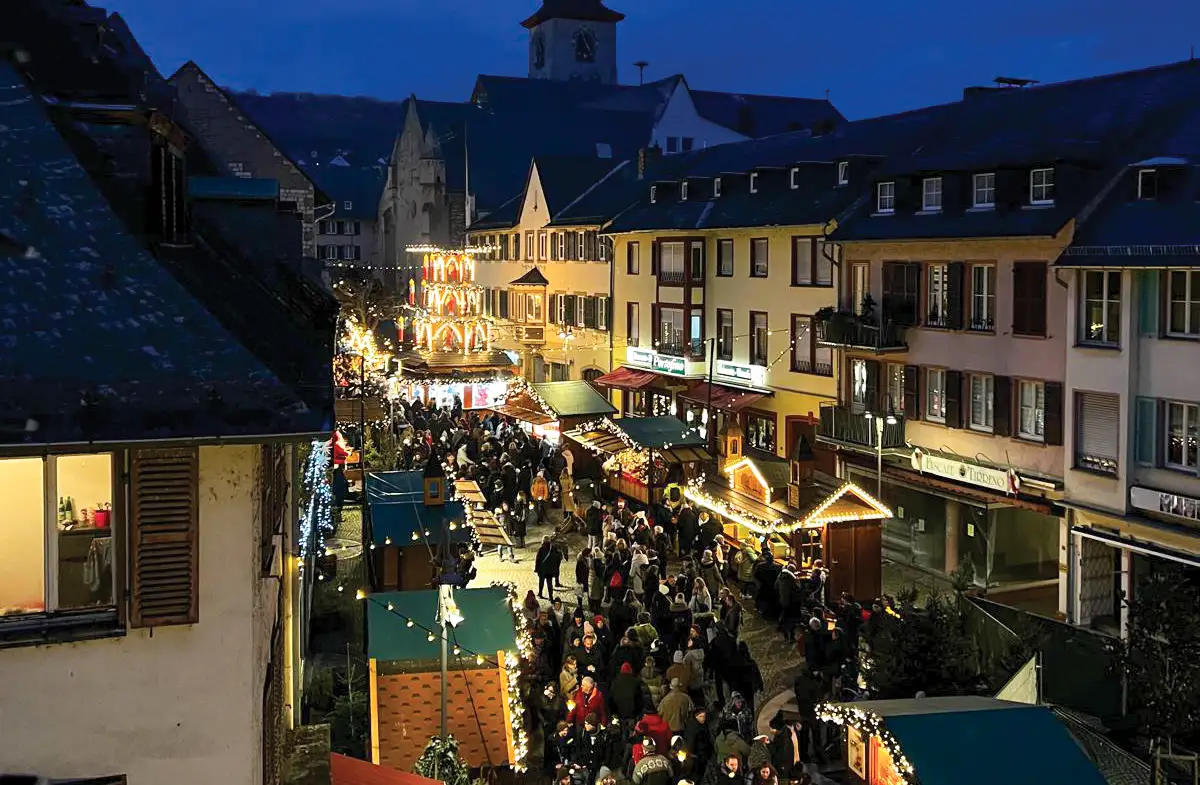
No story showcasing German cuisine would be complete without a nod to the whimsical Christmas markets. More than just shopping, these markets capture the spirit of the season—blending history, culture, and togetherness in a uniquely German way. Wooden stalls overflow with gingerbread, hand-carved ornaments, mulled wine (Glühwein) and sizzling bratwurst hot off the grill. Lebovitz says, “My favorite market is the Deidesheim Christmas Market because they have incredible sandwiches they make from grilling salmon over an open flame, serving it on a fresh roll with lettuce and dill sauce. I honestly look forward to it all year and buy a few to bring home!”
Wendy Jo Peterson, MS, RDN, author of Bread Making for Dummies (also available in German as Brot backen für Dummies), has been living in Germany for over six years and says, “Christmas markets are magical here. I have two absolute favorites, the Middle Ages market in Esslingen, where everything is set from the time of the Middle Ages—it’s like taking a step back in time, from dipping candles, ax throwing, torches, hand pushed carousels, and more.”
We of course can’t forget about Oktoberfest. This two-and-a-half-week celebration is steeped in food traditions and history. Oktoberfest got its start in 1810, when Munich threw a multiday party to celebrate the wedding of Crown Prince Ludwig and Princess Therese—complete with feasting, horse races, and cheer. The royal bash was such a hit, the city decided to do it again the next year, and the next, until it grew into the world’s biggest folk festival. Today, millions flock to Munich each fall to raise a stein of specially brewed beer, dig into pretzels and sausages, and sing along to lively brass bands. More than just a party, Oktoberfest is Bavaria showing off its food, drink, and hospitality on a grand stage.
Regional Flavors and Daily Life
Germany itself is a country with deep regional diversity, reflected beautifully in its food. Geography, climate, and history have shaped what ends up on the table. Where you are in Germany often determines what you eat. Up north, darker rye-heavy loaves dominate the bread baskets, while further south and west, crusty rolls and pretzels appear more often. Near Belgium, you find more Belgian influence like rich stews and fries. A specialty you find frequently in the south of Germany is Spinatknödel, which are spinach and day-old-bread dumplings. These are often served in a butter and Parmigiana sauce,” Peterson says.
After World War II, Germany was divided into two separate states—Federal Republic of Germany (West) and German Democratic Republic (East). This division had a significant impact on culinary cuisine. East Germany had more food scarcity which led to simpler and more resourceful dishes while West Germany had access to more diverse ingredients. In 1990, Germany was reunified, which led to an exchange of culinary practices
Lebovitz, currently living in Germany, explains, “Where we live now in Rheinland-Pfalz is close to the wine-growing region, known for Riesling, so the food feels more tied to wine country. Think onion tarts, hearty sausages, and lots of wine. A glass of wine at a restaurant costs less than the water!”
These differences highlight how local agriculture and traditions shape daily eating. Bread alone is an example: Germany boasts more than 3,000 recognized varieties. Bakeries are community staples, with people stopping in daily for fresh rolls or loaves. Peterson shares, “In our area of Baden-Württemberg, there are bakeries everywhere you look. In our small village we have over six bakeries. The goal is that citizens can walk to get fresh bread daily,” Peterson says.
Even though my family has been living in the United States for several generations, we still incorporate common German food practices in our daily meals such as meat as a staple at meals, potatoes with most meals, cucumber salads in the summer, and cakes or cookies available for when the afternoon craving strikes.
Schnitzel, Wurst, Spätzle, Muesli, Sauerbraten, and Sauerkraut are common daily dishes served. Ramirez says, “We still make German food. Schnitzel is one the kids still ask for, and we make and serve Spätzle and Kraut with it. Gurkensalat is a German cucumber salad we love, but I modify it for my dairy issues.”
Nourishment Beyond the Plate
What strikes me most about German food traditions is how they extend beyond nourishment. They reflect a culture of gathering, making time for meals, and valuing the craft of food itself. Even the daily rhythms—stopping for fresh bread, sitting down for coffee and cake—speak to a sense of balance. Lebovitz shares, “Coffee and Kuchen is about the pause: a quiet moment to savor or even a time to gather and connect.”
As a dietitian, I see parallels between these cultural practices and the messages we share with clients. Food is not just fuel. It carries identity, community, and joy. Incorporating heritage foods into our routines connects us with family and roots. It can also remind us to slow down, celebrate, and eat with intention.
German cuisine is at once hearty and nuanced, grounded in history yet evolving with the present. It reflects both the land and the people who shape it. For those of us with ties to the culture, the flavors carry a sense of home—whether that’s through crusty, homemade bread for breakfast, cake and coffee shared in the late afternoon, or roast served with kraut and potatoes. At its heart, German food reminds us that meals are more than sustenance—they’re a celebration of heritage, the seasons, and togetherness.
— Karman Meyer, RDN, LDN, specializes in culinary nutrition and sleep health. She’s the author of Eat to Sleep: What to Eat & When to Eat It for a Good Night’s Sleep—Every Night, which became a one-hour PBS special program in 2023, and The Everything DASH Diet Meal Prep Cookbook. Meyer created the online course, Culinary Demo Pro, and is the recipe creator at TheNutritionAdventure.com.

Braised Red Cabbage (Rotkohl)
Serving size: ½ cup
Serves 6
Preparation time: 10 minutes
Ingredients
- 1 T unsalted butter
- ½ small yellow onion, chopped
- 1 small Granny Smith apple, peeled and chopped
- ½ head red cabbage, sliced ¼-inch thick
- ¼ cup balsamic vinegar or red wine vinegar
- 1 T granulated sugar
- ½ tsp Kosher salt
- 1 bay leaf
Directions
- Melt butter in a medium saucepan over medium heat. Once melted, add onion and apples. Cook for 5 minutes, stirring frequently.
- Add sliced cabbage to the saucepan. Cook for 5 minutes, until slightly wilted, stirring occasionally.
- Add vinegar, sugar, salt, and bay leaf. Stir well. Cover with lid and cook for 40 minutes, stirring occasionally.
- Remove bay leaf. Serve dish warm or cold.
Nutrient Analysis per serving (½ cup)
Calories: 76 kcal; Fat: 2 g; Saturated Fat: 1 g; Cholesterol: 5 mg, Sodium: 272 mg, Carbohydrates: 26 g, Fiber: 3 g, Protein: 2 g
— Source: recipe and photo courtesy of Karman Meyer, RDN, LDN