



Today’s Dietitian
Vol. 28 No. 2 P. 46
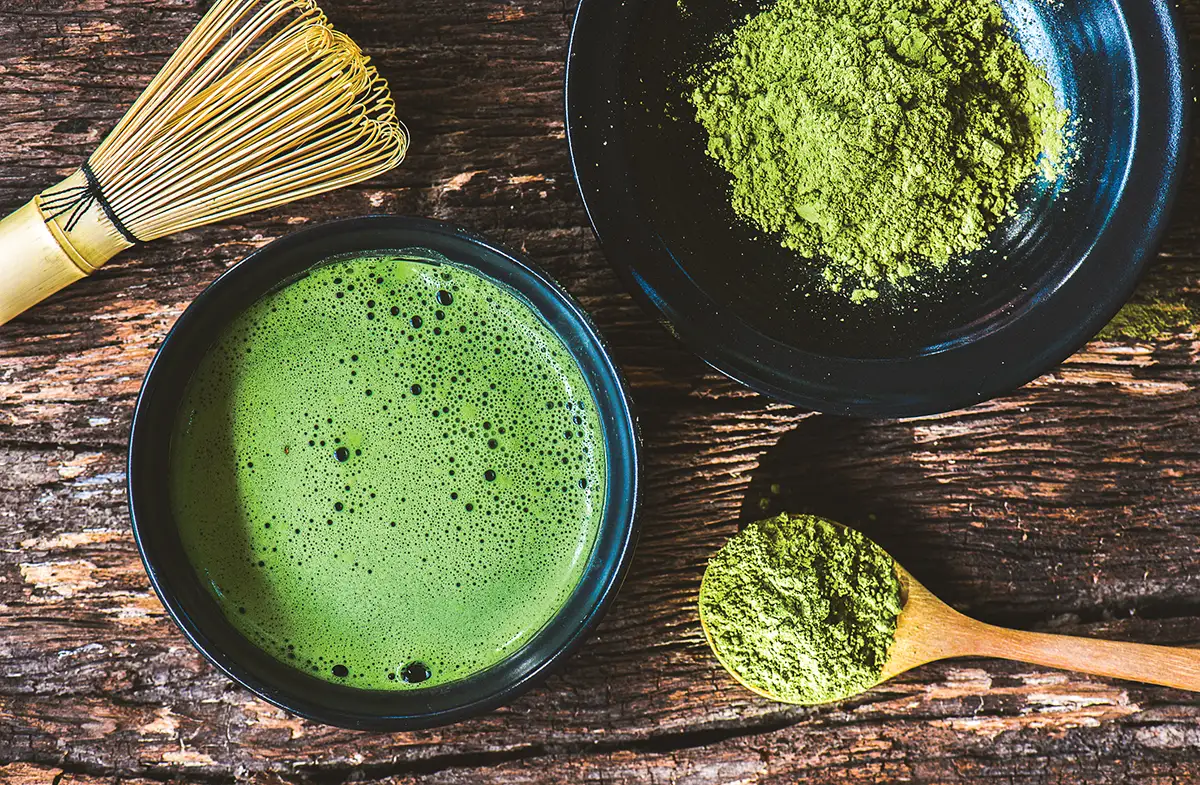
Once confined to traditional Japanese tea ceremonies, matcha has emerged as one of the biggest beverage trends in the United States. This vibrant green powder made from whole, specially grown green tea leaves—traditionally cultivated and processed in Japan—has transcended its ceremonial roots to become a mainstream phenomenon across the globe.
Now you can find matcha in everything from lattes, energy drinks, and smoothies to ice cream, chocolate, and matcha-infused snacks. Even Starbucks and Dunkin’ have added iced matcha lattes to their menu.
You’ll most likely find matcha in coffee shops and cafes, including the proliferating matcha-specialty chains that offer a range of flavored matcha drinks (like layered fruity drinks, boba, and matcha lemonade) or cafes that focus on authentic ceremonial rituals.
Mentions of matcha on menus have grown 46% over the last four years, according to the Chicago-based market research firm Datassential.
The striking color, health halo, and versatility of matcha are driving expansion across categories. Now matcha is a featured ingredient in both fast-casual and fine-dining restaurants—showing up in croissants and other pastries, brownies, cheesecakes, tiramisu, mochi, and savory applications like green curries, ramen broths, noodles, pizza crusts, sauces, compound butter, and aioli.
Matcha is even a favorite of mixologists who are creating matcha martinis (“matchatinis”), margaritas, and other craft cocktails using the green tea powder.
Datassential predicts matcha’s growth on menus will outperform 99% of all other foods, beverages, and ingredients over the next four years.
Viral TikTok Trends
The popularity of matcha has been buoyed by social media, especially TikTok, where #matchatok has racked up tens of millions of views, including videos on how to make your own matcha latte at home or where to find the best matcha powders.
The latest TikTok trend is cloud matcha, which starts with a glass of coconut water or milk that is topped with a matcha cloud foam of whipped heavy cream or full-fat coconut cream, matcha powder, and sweetener.
In Japan, a matcha hack at 7-Eleven convenience stores went viral on TikTok, where customers buy a cup of ice, pour in a carton of matcha tea, and top with soft serve vanilla ice cream in a squeezable pouch to create a matcha latte.
With social media feeds flooded with lattes and sweets flavored with matcha, it has disturbed a fragile supply chain leading to a global shortage of ceremonial grade matcha.
Yelp reported that searches for “matcha powder” increased 791% compared with the prior year, including searches for businesses with high-quality matcha powder in stock.
Types of Matcha
Matcha originated in China but was later brought to Japan, where it gained cultural significance through Zen Buddhism and tea ceremonies called chado. The way matcha is grown and processed distinguishes it from other green teas.
About four weeks before harvest, the tea plants are shaded, forcing the plant to produce higher levels of chlorophyll and amino acids, specifically L-theanine, and lower levels of bitter-tasting catechins. This contributes to matcha’s vivid green hue and slightly sweeter flavor. Shading also increases caffeine levels.1
After steaming, the whole leaves are dried (known as tencha at this stage) and then finely ground—traditionally in stone mills.
There are two main types of matcha:
- Ceremonial grade: made for traditional Japanese tea ceremonies, this matcha is intended to be whisked with hot water and enjoyed on its own. Produced from the youngest, most tender shade-grown tea leaves, this finely ground matcha is bright green and the flavor is umami-rich with a subtle, natural sweetness.
- Culinary grade: Formulated for cooking and mixing into recipes, this matcha uses more mature leaves that are harvested later in the season. The leaves have a duller green color, and the flavor is stronger and earthier with grassy or slightly bitter notes.
Keep in mind that these are marketing terms rather than legally regulated categories, says Abigail Grosskopf, PhD, known as the Matcha Scientist on social media. No governing body enforces matcha grading, so quality can vary widely between brands. Instead, she recommends looking for terms like “first-harvest” on the label and buying brands from Japan, including well-known growing regions like Uji (Kyoto) and Nishio.
The Global Japanese Tea Association encourages people to use more economical, lower grade matcha for recipes. This later-harvest matcha is more abundant and better suited to cooking. The delicate flavors of high-grade matcha can be lost when used in lattes or sweets.
Promoting awareness of these distinctions helps ensure Japanese tea is enjoyed with respect, while supporting the craft and tradition behind it, the association says.
Evaluating Matcha’s Health Claims
Part of the global matcha mania is fueled by the purported health benefits, and some brands are making bold claims ranging from cancer prevention to detoxification.
Since matcha contains the whole tea leaf, more of the beneficial compounds are consumed, compared with steeped green tea. Even so, the health claims for matcha are often exaggerated. A recent review of matcha studies concluded that matcha may decrease stress and slightly enhance attention and memory, but the cardiometabolic and anticancer effects have only been studied in animals or in vitro models, so more human trials are needed.2
“Unfortunately, many people combine matcha with large amounts of sugar in lattes or desserts, which cancels out the health benefits of matcha,” says Ginart. Another issue is that only a small amount of matcha or plain green tea powder—unshaded leaves or what’s being called “fake matcha”—is often added to matcha-flavored foods, she says.
Authenticity of Matcha
The increased demand for matcha has also sparked conversations about cultural appropriation. Some critics are concerned that matcha has simply turned into the latest TikTok fad and has been stripped of its cultural significance.
What was once a meditative ritual is now reduced to an Instagram-friendly green drink or indulgent dessert that is no longer connected to matcha’s history.
A startup called Poda that sells matcha in a squeezable tube fueled this controversy because its marketing campaign positioned traditional matcha as a product needing improvement. Rather than mixing matcha powder and water with a bamboo whisk, Poda dismissed this traditional time-consuming task, which received a significant amount of backlash online.
As matcha continues its rise from traditional tea ceremonies to trending lattes and desserts across the globe, it’s important to remember that long before it became a social media sensation, matcha was a sacred part of Japanese culture—anchored in ritual, mindfulness, and respect.
As we savor matcha’s presence in modern life, let’s also savor its story—and ensure that our enthusiasm honors the centuries of craft and cultural tradition that brought it to us.
— Janet Helm, MS, RDN, is the founder of Food at the Helm, a strategy and communications consultancy focused on food brands.
References
1. Chen X, Ye K, Xu Y, Zhao Y, Zhao D. Effect of shading on the morphological, physiological, and biochemical characteristics as well as the transcriptome of matcha green tea. Int J Mol Sci. 2022;23(22):14169.
2. Sokary S, Al-Asmakh M, Zakaria Z, Bawadi H. The therapeutic potential of matcha tea: a critical review on human and animal studies. Curr Res Food Sci. 2022;6:100396.