|
E-Newsletter • October 2025 |
▼ ADVERTISEMENT

|
Editor's E-Note
Mapping Personalized Nutrition
Personalized medicine is an increasingly popular term now used to market a growing array of wearables and apps intended to offer the user insight into how their unique body works, supporting them in optimizing individual health goals. Although there are varying degrees of validity and research behind these technologies and the tools they advertise, the public appeal is undeniable. In this month’s E-News Exclusive, we look at one area of personalized nutrition research gaining traction: nutrient-gene interactions revealed through nutrigenomics and nutrigenetics. What can insights from this field offer the rapidly expanding market of personalized nutrition?
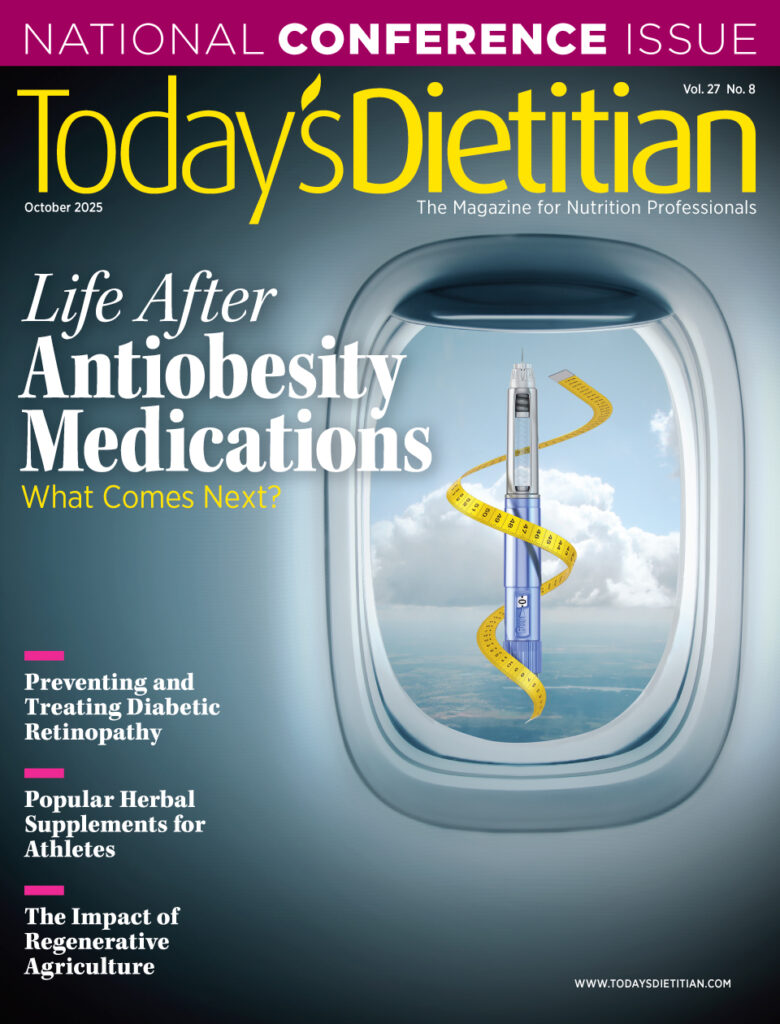
After reading the article, visit TD’s website at www.TodaysDietitian.com to read the digital edition of our October issue, featuring our cover story, “Life After Antiobesity Medications,” exploring the timely topic of what patients and clients can expect when and if they decide to stop taking these medications and how RDs can best support them in the process. Also in the issue, you’ll find feature stories on diabetic retinopathy, regenerative agriculture, and popular herbal supplements in athletics.
Please enjoy the E-Newsletter and give us your feedback at TDeditor@gvpub.com. Don’t forget to like us on Facebook and follow us on X, formerly known as Twitter.
— Heather Davis, MS, RDN, LDN, editor |
|
|
| In This E-Newsletter
|
|
▼ ADVERTISEMENT
 |
|
▼ ADVERTISEMENT
 |
▼ ADVERTISEMENT

What’s New in Nutrient-Gene Interactions
By Heather Davis, MS, RDN, LDN
There’s 99.9% similarity across human genomes, with the remaining 0.1% variation being what makes each person unique.1 In that tiny number, there is a tremendous amount of diversity, including in how an individual processes and responds to dietary components.
Nutrients from food directly impact health by influencing the expression of genes involved in metabolic processes. Nutrigenomics—the science of how genes interact with each other and with diet—while still in its infancy, is helping shape the future of personalized nutrition. The transcription and translation of genes can be altered by macronutrients, micronutrients, and phytochemicals, which go on to have profound effects on homeostatic processes throughout the body that influence disease progression. Diet may also affect genes through influencing the frequency of genetic mutations at the chromosomal or base sequence level. Additionally, the health effects of nutrients depend in part on the inherited genetic variants that alter the uptake and metabolism of nutrients themselves.2
Nutrigenomics vs Nutrigenetics
Nutrigenomics and nutrigenetics are terms often confused with one another, despite being distinct. Nutrigenomics explores how the nutrients we consume influence gene expression and interact with our genes' activity. Nutrigenetics focuses on the effects of these genetic variations on food components, offering information about how an individual’s specific genes or body responds to food, and this can be considered their specific and unique nutrigenetic profile.2
To date, nutrigenetic research has primarily focused on the effects of single nucleotide polymorphisms (SNPs), epigenetic markers, and other genomic markers of biological responses to micronutrients and macronutrients. For example, a study comparing agricultural societies that ate high-starch diets with hunter-gatherer societies that ate low-starch diets found differences in the number of copies of the starch-digesting salivary amylase gene between the two groups. Researchers noted that as a result of the more robust salivary amylase presence in the high-starch consuming group, they appeared better equipped to digest the starch, with a corresponding reduced risk of obesity, despite the higher starch intake.2
▼ ADVERTISEMENT
 |
Newly Discovered ‘Sixth Sense’ Links Gut Microbes to the Brain
In a breakthrough that reimagines the way the gut and brain communicate, researchers have uncovered what they call a “neurobiotic sense,” a newly identified system that lets the brain respond in real time to signals from microbes living in our gut.
The new research, led by Duke University School of Medicine neuroscientists Diego Bohórquez, PhD, and M. Maya Kaelberer, PhD, and published in Nature, centers on neuropods, tiny sensor cells lining the colon’s epithelium. These cells detect a common microbial protein and send rapid messages to the brain that help curb appetite.
But this is just the beginning. The team believes this neurobiotic sense may be a broader platform for understanding how the gut detects microbes, influencing everything from eating habits to mood—and even how the brain might shape the microbiome in return.
“We were curious whether the body could sense microbial patterns in real time and not just as an immune or inflammatory response, but as a neural response that guides behavior in real time,” says Bohórquez, a professor of medicine and neurobiology at Duke University School of Medicine and senior author of the study.
Micronutrient Deficiency Linked to Chronic Pain
Lower levels of certain vitamins and minerals were found to be associated with chronic pain in a recently completed study led by researchers at the University of Arizona Health Sciences and published in Pain Practice.
This is the first study to take a precision medicine approach to chronic pain on a large scale by broadly examining micronutrient levels of people with and without chronic pain and exploring the incidence of chronic pain in people with or without micronutrient deficiencies. The findings could inform personalized nutritional strategies to help manage chronic pain.
“I treat chronic pain patients, and oftentimes we don’t come up with a diagnosis. But just because there isn’t a surgery that will help you doesn’t mean you’re not in pain. It's just means that our understanding of pain is limited to date,” says senior author Julie Pilitsis, MD, PhD, head of the University of Arizona College of Medicine – Tucson Department of Neurosurgery and member of the Comprehensive Center for Pain & Addiction. “This study is a novel way to approach chronic pain treatment, where you are looking at the patient holistically to see what could be going on systemically that is easily modifiable—changes in diet as opposed to medications or other things.”
▼ ADVERTISEMENT
 |
CPE Monthly
Dive into the latest research on the role of omega-3 fatty acids in metabolic syndrome in this month’s issue of Today’s Dietitian. Read the CPE Monthly article, take the 10-question online test at CE.TodaysDietitian.com/CPEmonthly, and earn two CPEUs!
Upcoming Webinars
We’re excited to offer 10+ webinars this coming fall and winter! Check out the latest live presentations, including sessions that focus on metabolic surgery for T2D, CKD, cultural foods, and oncology nutrition!
2026 Spring Symposium
The Today’s Dietitian Spring Symposium continues to set the standard for evidence-based learning, real-world application, and professional connection Join a distinguished lineup of presenters sharing insight on the trends, technologies, and topics defining modern dietetics. From clinical nutrition and food literacy to communication, technology, and leadership, these sessions deliver the knowledge and inspiration to elevate your practice and career.
Check out our expert speaker lineup here.
Register now to take advantage of Advance Registration savings!
|
Once again, we're asking you to let us know about dietitians you believe exemplify the profession and are making a difference in their clients' and patients' lives, in their communities, and in the field of dietetics. Each year, our March issue shines a spotlight on 10 dedicated and deserving dietitians for their work and service within dietetics. Nominate a deserving colleague now.
Deadline: November 1, 2025.
|
Nonjudgmental Food Journey
AteMate is the nonjudgmental place that makes it easier for clients to share their food journey with their RD. The app’s evidence-based approach to food journaling removes the hassle and allows RDs to help clients improve their relationship with food and build healthy, sustainable habits. Learn more »
Accounting Made Simple
Wave lets small business owners like RDs in private practice create attractive invoices, accept online payments, and make accounting and planning for taxes easy—all in one place. Wave is built for small business owners and solopreneurs, whether you’re a newbie or seasoned pro. Learn more » |
In the November/December Issue
• A Critical Look at Osteoporosis
• RDs Shaping AI in the Field of Nutrition
• Cognitive Performance Nutrition
• Healthy Holiday Travels |
|
|
COVER STORY
Life After Antiobesity Medications
The number and type of antiobesity medications (AOMs) is expected to increase in years ahead. However, there are many reasons individuals may choose to discontinue these drugs. Experts weigh in on what life on the other side of AOMs can look like and what RDs should know.
FEATURE
Preventing and Treating Diabetic Retinopathy
Discover how diabetic retinopathy, one of the most common complications of diabetes, is impacted by nutrition both in its prevention and management.
|
|
|
| Advertising Opportunities |
Have a product or service you want to market to nutrition professionals? Utilize the reach of Today’s Dietitian Magazine to accomplish your marketing goals. E-mail our experienced account executives today at sales@gvpub.com or call 800-278-4400 for more information.
|
| © 2025 Today’s Dietitian Magazine |
|
|